Short like a Swedish summer, but oh so sweet

0013048618_10

If you are a Dungen completist who felt slightly underwhelmed by the split record with Woods, Gustav Ejstes’ involvement in Hästpojken’s new album ‘Hästpojken är död’ or even the Amazing’s ‘In Transit’, then it is time to celebrate. The new Melody’s Echo Chamber album ‘Bon Voyage’ is for you.

Whereas Melody Prochet collaborated with Tame Impala’s Kevin Parker on her intriguing 2012 debut, she has broadened her vision considerably this time.

Although quintessentially pop – as opposed to rock – ’Bon Voyage’ out-psychs Dungen and mixes everything from vocoders to backwards vocals to flutes to Pink Floyd organ bursts to disco to Swedish folk music in a fucked-up but quite lovely way. And while Prochet’s voice sticks to a slightly anonymously high-pitched register as on her previous outing, she adds Swedish to her French and English. You might think it is for exotic effects, but honestly, this comes across as the collaborators just having a lot of fun. And fun it is!

Songs get interrupted by oddball sections and seemingly disjointed passages; they stop, start and stagger around but ultimately never falter. Partly this is due to the workout-like propellant they get from Dungen/The Amazing drummer Johan Holmegard.

He is joined by bandmates Gustav Ejstes, Reine Fiske and Fredrik Swahn who play, sing, scream and probably make a few other noises too. Oh, and the Tame Impala connection is still there, with Nick Allbrook who does a strange spoken part, among other things.

After overcoming a serious injury to her neck and spine, Prochet moved to Sweden to record this album with above friends in the stillness and seclusion of a forest. The results are genuinely out there in a Swedish hippie sort of way.

Clocking in at only 34 minutes it is short like a Swedish summer, but oh so sweet.

A suite of electronics and swirling piano

Matt Baber

Whereas Matt Baber’s excellent ‘Outskirts’ album from 2013 still had many anchor points in rock music, his second official album (he has privately made about 10 others) is something completely different. For lack of better (or any!) knowledge, I would say that his ‘Suite for Piano and Electronics’ in nine parts is a modern classical record.

Together with Joff Winks, Matt is the creative core behind progressive rock band Sanguine Hum. One of the aspects that makes Sanguine Hum such a unique experience is Matt’s textural work, utilising both electronics and keyboards. And you can recognise some of that here, with flights of notes that both loop and move at the same time; although they are repeated they also swirl and transform. And just like with Matt’s work in Sanguine Hum, there is quite some drama to uncover as chaos and structure combine.

Compared to solo extravaganzas made by keyboard wizards of yore, like Rick Wakeman or Patrick Moraz, this is on the opposite end of the spectrum. Minimalistic and maybe influenced by the likes of Terry Riley or Philip Glass. And that is a good thing indeed.

Although the album starts off with a warbling electronic sound, this really is a piano album more than anything else. The electronics mostly create a context in which the ivory tones are wrapped. 

And it works beautifully. Rather than diminishing the electronics, the effect is really to focus the listener on the physicality of the piano. Five of the tracks have electronic intros; they almost function as handrails that offer a piano music novice like me something to hold on to.

Despite the simple instrumentation, there is nevertheless a lushness to this music that makes me think of rain-soaked, rolling hills in the English countryside. Little melodies gather like rainwater in pools on the soft slopes and flow in rivulets of tones. And organically, they sometimes develop into quite catchy little tunes.

I am quite out of my depth with this album. It is not something I would listen to if it wasn’t for Matt Baber. But that just goes to show how important it is to step outside one’s comfort zone, as this is a great album.

My biggest surprise is how easy ‘Suite for Piano and Electronics’ is to listen to and how it makes me feel an increased sense of awareness. Headphone music that wakes you up rather than making you drowsy!

Cobalt Chapel listen to their inner kraut

Mountain [24 bit 44.1k master]

Cobalt Chapel, the haunting psych duo consisting of Cecilia Fage and Jarrod Gosling who made a splendid self titled debut album last year are back with ‘Mountain’, an EP that clocks in at over 20 minutes.

Compared to the debut album, this EP moves the duo into slightly harder territory. At least on the opening track, they definitely have been paying more attention to their inner kraut.

With the second track ’Bohemia’ we are back in more familiar territory. Cecilia’s wordless vocals float around like a modern day Norma Winstone, and there is a broken down circus feel to the whole thing as organs weave in and out. Lost my mind! Who? Me?

”It is all done with just organs, but there’s some Mellotron on ’Canticle’,” comments Jarrod. 

And maybe it is the Mellotron, but the mood on the third track is at first almost sacral. However it soon develops into a chaotic organ workout that is pagan more than anything else, before ending in something that could have been recorded in a church after all.

The EP concludes where it began, with a radio edit of the title track. Not sure if this will be played on the radio, but I do know that I love it!

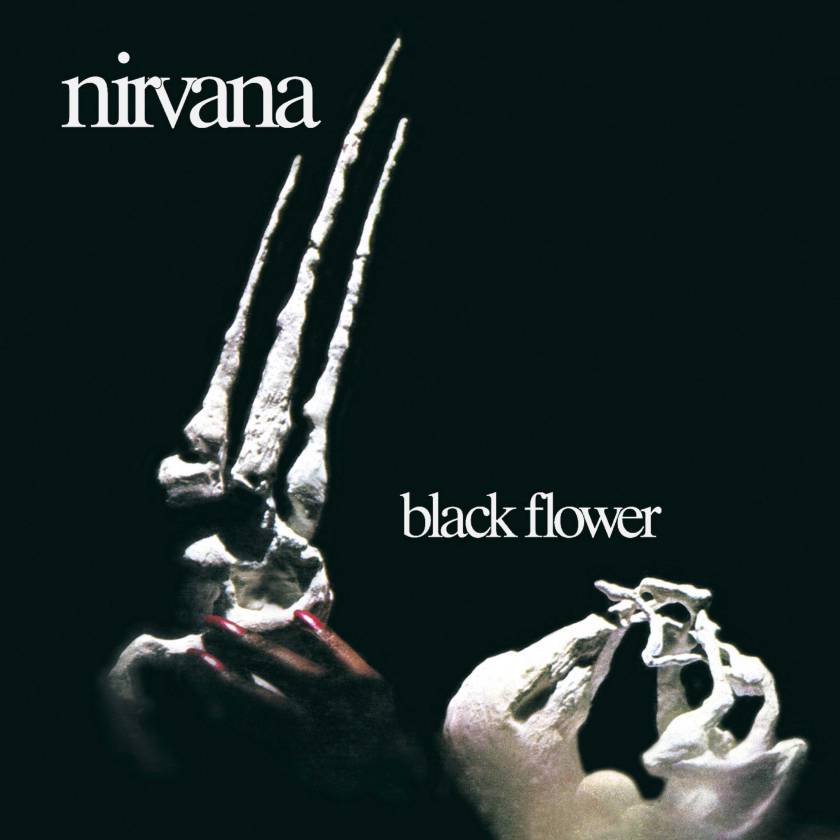
Nirvana and the ‘Black Flower’ confusion

NIRVANA-Black-Flower

Despite being the first act signed to Island Records and the first act to ever do a rock opera album, the original Nirvana has always been a rather obscure band. And that is a shame as what the Nirvana duo comprising Patrick Campbell-Lyons and Alex Spyropoulos accomplished was every bit as exciting as what that other band from Seattle did in a different genre later on.

‘Black Flower’ would probably also qualify as the original Nirvana’s most obscure album. Recorded over just three short days in between March and June 1969, it was originally intended as their third album on Island. Instead only a small number of copies appeared in 1969 on more or less instantly folding American label Metromedia, after the Island contract had been abruptly cancelled. A small number of copies were also released in Italy and Brazil, and in 1970 on Pye in the UK.

But the confusion doesn’t end there. It appears that one of Alex’s cousins gave Nirvana money to remix the tapes on the condition that they dedicated the album to his son Markos who had a terminal disease. Although the original Metromedia release appears to have no visible title at all, the dedication to Markos III appears on the back sleeve just above the band name. However, on the Pye release, the record labels have ‘Dedicated to Markos III’  printed on them. Hence the album has been called variously ‘Dedicated to Markos III’ or simply ‘Markos III’ across various reissues over the years, although the initial reissue on Edsel in 1993 actually had the title down as ‘Black Flower’.

All this confusion hides the fact that the music on this album is quite grand and rather unique. More continental (Francophile, even) than its 1969 peers in the UK, it has a cinematic sheen and combines sweeping orchestral arrangements with some quite dramatic and well-written pop songs. It also benefits from being less naive than Nirvana’s earlier material.

Now that Esoteric Records are releasing the definite version of the album, remastered from the original tapes, I am immediately swept away by the album’s big and cool late 60s sound and the swooning melodicism on display. Although some of the more heavily orchestrated passages become a bit muddled, probably due to too many mix-downs on the master, the overall quality of this remaster is astonishingly crisp and engaging.

But at the same time, this release opens up a new layer of confusion about the album. Although it has been remastered from what is referred to as the “original tapes”, what we get is most likely the remixed version released on Metromedia. Because although Patrick Campbell-Lyons is quoted in the liner notes as saying the split with Island Records boss Chris Blackwell was amicable and that he respects the way Chris dumped them, the searing lyrics on ‘Christopher Lucifer’ must certainly be about the record company boss:

“His name was Christopher

Like in the bible, believe it or not

They call him Lucifer because he gambled

You’ll never never never never understand oh oh oh

Such a sad sad state of affairs

When you have to fake it

But you’ve always got to make the first step

If you want to break it”

I would not hold it likely that this track was on the original Island Records tape. So where was it recorded and what was on the Island Records master tape? An earlier version with different lyrics? Or maybe a completely different song, such as ‘Taxi’ (included here for the first time from an acetate)?

The confusion surrounding the ‘Black Flower’ album might never be fully cleared. But if you listen to it now, you will find that the lingering mystery adds to the charm rather than detracts from it. I most definitely recommend you to check it out.

MSMCD191_lr

And if you get bitten by the Nirvana bug, you might want to know that Patrick Campbell-Lyons put out a rather intriguing solo album last year, titled ‘You’re A Cloud, I’m A Comet’. Housed in an incredibly cheap-looking sleeve featuring a host of baguettes flying over a nature picture, it was more or less doomed to obscurity on release. Although I bought it then, it has taken me some time to get to the point that I think it is something of a nugget. Patrick’s song writing skills are in good form and the arrangements are really nice, albeit not as over the top as back in the day. His voice is considerably more rickety than it was half a century ago, but the fragility of it somehow lends more portent to the lyrical content.

He also reunites with Alex Spyropoulos who plays the heavily featured piano on ‘I Found A House’. A beautiful track.

Free Dracula soundtrack

a1155798215_10

I had no idea that tomorrow is World Dracula Day, in celebration of the date of the first publication of Bram Stoker’s book. 

To be honest, the only vampires that give me the creeps are the current onslaught of ticks, the horrid and parasitic arachnids. But the bats that circle around in the air over our front yard at night, I think are beautiful, if anything.

Nevertheless, Karda Estra have decided to celebrate this event by making the ‘Voivode Dracula’ album available for free on Bandcamp for a few days. And if you don’t already own it, then you simply must download it. Don’t continue reading this text, just hit the link and go.

But if your eyes are still lingering here, then I would say that this is modern classical music for the hauntology or goth fan. Like most of Karda Estra’s music, it is meticulously composed and very ambitious. On the one hand dramatic and emotionally intense, on the other, soaring and almost glacial.

It is very easy to conjure up black and white horror movies images while listening, yet simultaneously this music is quite modern.

The perfect soundtrack when reading any horror novel, not only Dracula. And it goes quite well with deep space SF too, actually.

Now, hit the link and download the album, really!

Music with a halo effect

Happy Endings

‘Happy Endings’ is literally an album that aims to take an optimistic look at death. And there’s certainly a lot worth dying for here (morbid pun intended). 

The atmosphere that Crayola Lectern (formerly known as Chris Anderson) creates is quite singular; the sound is layered and dense in a way that sometimes fuses individual instruments, creating a halo effect that obfuscates distinctions between what is electric or acoustic and what is digital or analogue. The effect is striking and the closest I can come in comparison is ‘Mr & Mrs Smith and Mr Drake’ made by the titular persons as a side project from the Cardiacs. Or maybe ‘Rock Bottom’ by Robert Wyatt.

Musically as well, although ‘Happy Endings’ does not always sound like those two references, they are the most relevant I can think of. Slightly wobbly keyboards play a central role. Vocals are fragile yet simultaneously treated almost like instruments. There is a feeling of ebb and flow, and the mood is melancholic without any trace of aggression.

The songs are not in a hurry to open up for the listener, but gradually seep under your skin; although there are some great melodies, the focus is rather on a state of listening.

The Cardiacs connection also extends to the musicians, as Jon Poole (keyboards), Bob Leith (drums) and Bic Hayes (guitar) are all on the record. They also played on Crayola Lectern’s 2013 debut album ‘The fall and rise of…’ which was one of my favourite albums that year. Importantly, it is also the only album from that year that still lives on my iPhone.

And ‘Happy Endings’ is very much cut from the same cloth: Although there are five years between the albums, I could almost imagine them having been recorded simultaneously. While that might not be the case, the album was at least recorded quite some time ago. I first heard a pre-release version of it back in 2016 and as far as I can tell, it is the same mix that is now being released. Not that it matters, as this is an album that isn’t connected to, or bothered with, current musical trends. Instead, ‘Happy Endings’ quite matter-of-factly creates its own time and space, and dares the listener to enter.

Not catering to trends poses its own issues, and maybe finding a sympathetic label is one of them. Luckily, Onomatopoeia Records (with William D Drake among others on their roster) have now stepped up to the challenge. Let us hope we do not have to wait another five years for the next album!

File under: Essential

https://onophonic.wordpress.com/hum/crayola-lectern/happy-endings/

Jack Ellister is genuinely psychedelic

Telegraph Hill

Jack Ellister – or Jacek Janiszewski – is normally associated with the Fruits de Mer label for which he has made a couple of albums and singles. Fruits de Mer is a label mainly focused on releasing cover versions of psychedelic music from the original era made by contemporary artists. Ellister’s debut album was however all originals – although very much in classic psychedelic style. Rough sounding, energetic and inspired, it is a great album. Since then though, his output has been all covers.

Much of the stuff Fruits de Mer puts out is quite a lot of fun, but it doesn’t really lend itself to repeated listening. If I am going to listen to that stuff, I simply rather go to the originals.

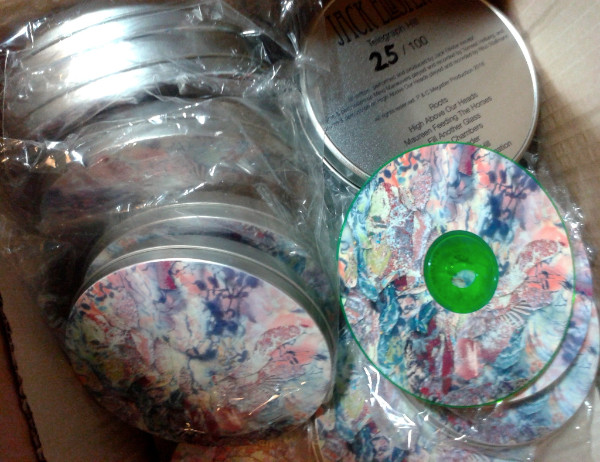
For that reason, I haven’t been listening all that much to Jack Ellister the last two years. Until now, that is, because all of a sudden he is back with a CDr of originals, called ‘Telegraph Hill.’ 

Although the focus is on a solitary voice with acoustic guitar, there are also drums, bongos, cymbals and weird electronic sounds.

The tone here is much more subdued and forsaken than the early Pink Floyd feel of the debut album, but it still has very much of that rough-edged charm and individuality.

The whole thing is very short, 9 tracks clocking in at just 21 minutes, and the overall impression is that these are demos, sketches that might eventually be turned into something more substantial. But maybe they won’t be and that is fine, as what is here is rather magical as it is. ‘Telegraph Hill’ honestly feels more genuinely psychedelic than 99% of the stuff others put out under that flag at the moment.

As far as I know, Jack has only made a hundred copies. My copy is number 52 and I just got it a couple of days ago, so chances are that a few still are left. 

I would sincerely recommend you to get in touch with him and get a copy before it is too late. You can find Jack here for example:

https://www.facebook.com/jackellister/

Kassin – still wild and wide-eyed

1

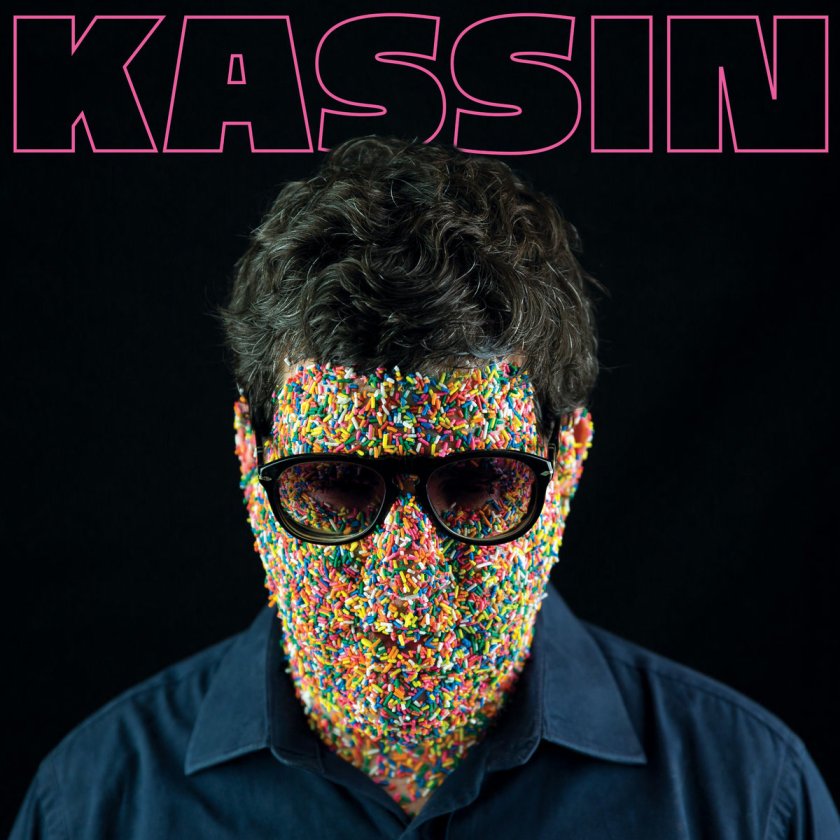
What I love about so many Brazilian MPB veterans is that they still care about being progressively artistic, where European and American veterans usually just retire with a folky acoustic guitar. Take Marcos Valle’s brilliant comeback in recent years, for example.

Alexandre Kassin is of a younger generation, he’s 44, but he will make these albums for another 30 years, just like Veloso, Gilberto, Jobim. His recently released new album ‘Relax’ tells exactly this story: natural, epic and thrilling MPB, still wild and wide-eyed, still playful with the inherited sophistication, still reaching for the sky when it comes to chords, melodies and careful, nerdy arrangements.

Videotapemusic expands his Tokyo exotica

1

Tokyo’s Videotapemusic has a new shimmering summer album out, ‘Souvenir’ – sort of like a super-soft and cozily semi-sampled yet edgy update of Haruomi Hosono’s wonderful exotica between 1973 and 1985. I think this guy started out pretty much alone but has expanded his recording circle of friends – this time it is almost like a session from Hosono’s heyday with a group of really great musicians. There are even steel pans and a steel guitar, horns and Carribean percussion, embedded in the electronics.

The strange Sam Buck–Jackie Leven connection

1

Sam Buck might have been pidgeon-holed as bro-country, but please forget that. Or, well, there are certainly more than traces left on his new 6 song E.P. “Bordeline”, but that only makes it weirder and better – because this certainly is some strange beast of a gay record. Yes, I forgot to mention that part – the actual pidgeon-hole genre is ‘gay bro-country’.

Which of course makes it conceptually better.

But what makes ‘Borderline’ so good – for me – is that as soon as I here that voice, and that phrasing, and those raw lyrics and big, long, howling melodies, I think of… Jackie Leven and Doll By Doll.

There’s no chance in hell Sam Buck ever listened to Doll By Doll. He usually name-drops Miranda Lambert and Thomas Rhett as influences (and throws in the odd Anohni reference). But then he drags in these occasional, messy electronics in the production, some ugly 80’s synth jabbing (it actually reminds me of Tony Visconti’s strange decision to bring in Jesse Harms’ AOR synths on John Hiatt’s ‘All of a Sudden’ in -82), and it all comes out so urgingly honest and beautiful, so relevant, on a messed up existential level… just like Jackie Leven used to do.

(His Bandcamp starts auto-playing track 4, but I suggest you take it from the top, for the maximum Jackie Leven experience.)