Fruits de Mer Records is a label that focuses on putting out 60s nuggets that I already have in cover versions recorded by bands that I would rather have releasing their own originals. Furthermore, the tracks are primarily released as vinyl singles, which makes it very expensive to buy in piecemeal fashion if you live outside the UK. The postage costs as much as the parcel, and with Brexit we will all be looking forward to adding taxes and fees to that…
Nevertheless, Fruits de Mer is quite honest with their 60s homage, and given that Cherry Red Records and their various sub-labels (Grapefruit, RPM, Esoteric, Lemon etc) have more or less cornered the market for original reissues, you have to give them a lot of respect for whatthey do. And, by the way, a lot of the Fruits de Mer releases are excellent!
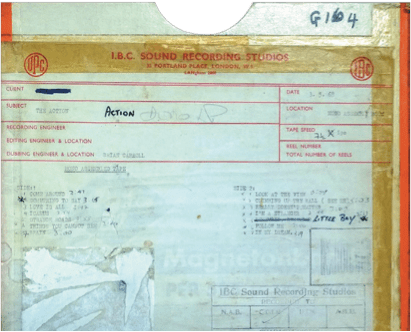
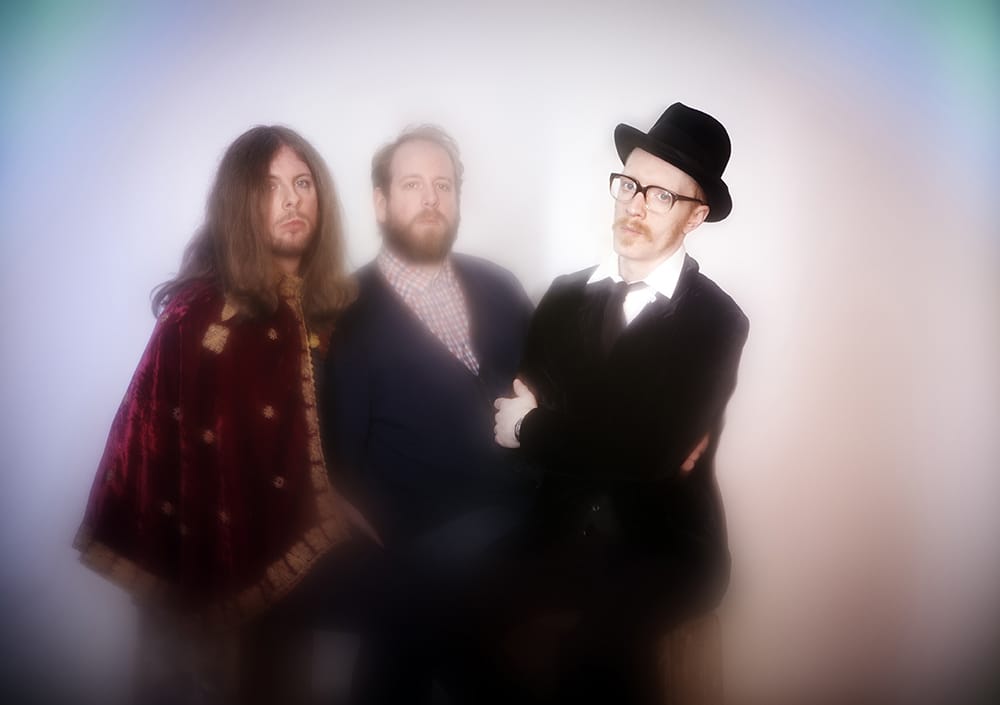
For this reason, I perched my ears when Fruits the Mer last year released a full cover LP of the Action’s final blast of glory. We now mainly know it as ‘Rolled Gold’ although it first saw the light in 1995 as ‘Brain (The Lost Recordings 1967/68)’ and was never released back in the day. The cover album is called ‘Strange Roads’ and the group behind it is Long Beach power pop/mod trio Sidewalk Society.
Doing a start to finish cover version of an LP that doesn’t exist in the first place is such a bonkers idea that you simply have to love it.
And the result is awesome. Not only do the Sidewalk Society really nail the charm of these songs, they also seem fully at ease with studiously recreating a set that was as close to improvised 3 minute pop songs that you might get.
The original recordings were quick and dirty “lets get some demos together and try to get a record contract” tracks, never intended to go anywhere beyond the ears of jaded record company executives.
Which brings us to these hastily conceived originals themselves. They are now being reissued on Grapefruit as part of a complete The Action box set called ‘Shadows and Reflections’ that is curated by master pop archeologist David Wells.
If you don’t have any previous reissue, you desperately need to get this box. In fact, you need to get it anyway since you get basically everything else the Action did in their short career to go along with it.
The Action, by the way, were the other protégées of a certain George Martin. In case you didn’t know. They were the first band he signed after he left EMI to set up his own company, AIR Productions. But between 1965 and 1968 he only managed to produce five singles, issued on Parlophone. Not a lot of bang for the bongo.
The Action cut a bunch of demos at various studios through 1967 into early 1968 and presented them to George Martin, who picked a song called ‘In My Dreams’ as their potential 6th single and recorded it with them properly at De Lane Lea studios. But they never even got as far as recording a potential B-side before George Martin suddenly decided to drop them.
And to cut a short story even shorter, that was that. The Action tried to shop the ‘Rolled Gold’ acetate around but were turned down by everyone, including John Lennon and Paul McCartney, whom they knew.
In late 1960s London, everyone was obsessed with the perfect pop song. And many succeeded, but more often than not only as one-hit wonders.
‘Rolled Gold’ has no singles. But what it lacks in production and focus, it delivers in breath of creativity. Not only do these demos have a very strong sense of presence – they make you feel like you are there, listening as the magic spontaneously happens – but they also have an incredible lightness of being. You get the feeling that writing pop songs (in some case maybe only melody stubs) is effortless, or at least immediate.
The other band that gives you that impression is of course the Beatles.
In that sense, ‘Rolled Gold’ captures the essence rather than the execution of pop music. As a result, its reputation is greater today than ever – and that is why you have contemporary bands like the Sidewalk Society covering it from start to finish. Go for the original first. Then keep on going.
On Sunday 9 September 2018 Sweden will elect a new government and unfortunately the nationalist party is predicted to grow even further. As a way to inoculate myself I have spent the summer listening to Swedish progg (yes, progg with two “g”s) from the early 70s.
The fact that the nationalist party wants more focus on Swedish culture betrays their ignorance about Swedish culture. Sweden is a country with a very low population density and large borders. As an effect, Swedish culture is often a reaction to and interpretation of what is happening somewhere else, and not so much about national romanticism.
Swedish progg is a case in point, as internationalism as well as solidarity were key ingredients and the focus was on progressive political thinking. As a result, Swedish progg was maybe more an offshoot of the hippie era than in synch with the progressive rock scene in the UK and the USA that at the time was more oriented towards establishing rock as an art form.
During my summer listening, I made up a list of the albums I liked best, more as a way of keeping notes than anything else. I ended up with twelve favourite records. But then I realised that the majority of them are not only overlooked germs but also available at very low prices, either as reissues or as originals.
So if you want to waste neither time nor money, here they are, in chronological order.
Life – Life (1971)
Even though some might say that Life’s self-titled album is not an overlooked gem but an established classic, it certainly went nowhere at the time. Originally scheduled for release in 1970 on major label EMI/Columbia but delayed to 1971, it got some great reviews that were forgotten by the public by the time it eventually trickled out in shops. Although a near mint copy costs you €1,000 on Discogs at the time of this writing, a mint copy of the RPM double CD reissue is listed for less than $7.If you don’t have it, you simply must get it.
Apart from Paul Sundlin and Thomas Rydberg, the trio that will recurrently feature in this article also comprised Anders Nordh. He had just come back from England after having played on the last Tages album (when the band was renamed Blond for the international market). With him Nordh brought Tages producer Anders Henriksson who was fresh from recording English prog rock band Quatermass, and as a result the album combines skilfully recorded and performed art rock with lyrics about life and eternity that could easily have felt pretentious if it weren’t for the forceful vocal delivery.
The mood on this album reminds me of King Crimson and the connection to the Swedish prog movement is merely the fact that it is sung is Swedish. In fact, an English version intended for the international market also existed as a promo at the time, and is included on the RPM reissue. Apart from new vocals, it also adds a few arrangement touches here and there, but somehow it doesn’t have the magic of the Swedish version. Don’t mess with a masterpiece.
Hawkey Franzen – Visa från gungor och sand (1971)
Hawkey Franzen played with Lea Riders Group in the late 60s, participated in the 1968 Swedish version of the *Hair’ musical, and had some connection or other to virtually any musician of note at the time. However, his solo albums from the early 70s have not garnered very much attention. Still, ’Visa från gungor och sand’ from 1971 is a thing of magic although it is a bit uneven. The songs are written and sung from the perspective of children, yet somehow manage to find a balance between the naive, the cringeworthy and the profound that is just brilliant. One standout track is ‘Kiki Lotta J:son Lindh’ which takes the perspective of a toddler in a baby cart, with her dad providing the melody line on flute. An incredible piece of music.
‘Visa från gungor och sand’ has only been reissued digitally yet has never been hard to find. You can pick up a copy for around €20 on Discogs but probably for half of that if you live in Sweden. Not so much a children’s record as a childish record, but nevertheless essential!
Kvartetten som sprängde – Kattvals (1973)
Released on the collectible Gump label in 1973, the group name was translated to *The Quarted that Blasted’ in Tobias Petterson’s ‘Encyclopedia of Swedish Progressive Music’. Well maybe they did that too, but given that their name is a play of words on Birger Sjöberg’s 1924 novel ‘Kvartetten som sprängdes’ or ‘The Quartet that Fell Apart’ it is of note that the band had been reduced to a trio at the time of recording this album.
Although I am not always fond of instrumental albums, there is so much fun stuff going on here that you somehow hardly notice. Musically there is a seamless fusion of rock music with Swedish traditional music and Scandinavian melancholy. Maybe it isn’t as unique, consistent or dark as what Jan Johansson did to jazz on ‘Jazz på svenska’, but there is a playfulness and lightness of touch here that simply draws you in.
Reissued on both vinyl and CD so no excuses not to pick up a copy.
Resan – Resan (1973)
After the disastrous experience with the Life album, Anders Nordh, Paul Sundlin and Thomas Rydberg regrouped with some other people as Resan (i.e. The Trip) and signed another major label contract, this time with Epic and released another abortive self-titled album.
Although the record is loosely constructed around a journey through life, the English translation of the band name is very appropriate as the music is very trippy. The band were allegedly living communally at the time and this is very much a hippie album. As such it is very loosely held together and in no rush to get things done. Nevertheless, it is absolutely brilliant and although the home recorded feel could make you believe this is all rather amateurish, performancesare in fact top notch. The songs are also very good although the hard rock grandeur that defined ‘Life’ is replaced by a West coast vibe.
The lyrics have also matured considerably and represent a significantly different take on the themes from the ‘Life’ album. Interestingly, the penultimate track on the album is in fact titled ‘Life’, making the thematic connection explicit (and boasts some hard rocking riffs to underline that).
Needless to say, ‘Resan’ was left totally in the cold by Epic and originals now cost more than hen’s teeth. Luckily it has been reissued by Subliminal Sounds on vinyl, and there is also a digital reissue. This album has not left my iPhone once since I downloaded it. An all time favourite.
Bättre Lyss – … till den sträng som brast, än att aldrig spänna en båge (1975)
Although I defined Swedish progg as having a political agenda, the only album that actually lives up to that promise in this list is the sole privately released album by Bättre Lyss. And since every song and almost every sentence here is political, it lives up to that in spades.
Given the importance of the lyrical content, you might want to get the original vinyl issue with 33 revolutions per minute, since the lyrics make up the front and back of the album cover. On the 2017 Guerssen/Sommor CD reissue reading the lyrics is nigh on impossible. Original copies aren’t extremely expensive, there is also a Guerssen/Sommor LP reissue you might want to pick up instead as it comes with a digital download that at least to my ears sounds better than the original vinyl.
Although recorded direct to stereo with few overdubs and displaying the rawness of a live-in-the-studio recording, this is a very accomplished album musically speaking: the dynamic combination between quiet parts and hard rock riffs are reminiscent of the Life album, and are indeed performed by Life’s Anders Nordh, who also helps out with some of the interesting arrangements here. The vocals are also of the top-of-your-lungs variety, although maybe not so much an influence from Life as a necessity here given the semi-live nature of the recordings.
Bättre Lyss means “better listen” by the way, and you really should! This is also a better listen than most other political albums you can find!
Figaro – Figaro (1976)
Here we find Anders Nordh and Paul Sundlin from Life and Resan joining up with a couple of friends for yet another self-titled one-off album for yet another major label (CBS). By 1976 one could argue that Swedish progg was already past its prime, and with Figaro we are as far away from political Swedish progg as you could get. Lyrics are if not directly lightweight then at least humorous, the production tries (and manages) to sound expensive and there is even a bona fide hit single in the form of the track ‘Framåt’. But hey, I am a pop lover at heart and ‘Framåt’ is really incredibly catchy and propulsive; a great song.
The single B-side ‘D. J.’ is the only major dud on the album, combining an irritating lack of melody with an un-funky delivery telling an uninteresting story about a disc jockey who should watch out that his records don’t get stuck in their groves. But on an album full to the brim with genuinely inspired pop music, even a track like that becomes acceptable, especially as it is placed at the end of side A and gets stuck in an endless run out groove, repeating “stuck in the groove”, “stuck in the groove”, “stuck in the groove” until you needle wears out.
I am sure that this album was despised by many upon its release, and it has never been reissued. However, there is a copy on Discogs for €10 and if you stumble upon it in a Swedish used records store, I would expect it to cost less than half of that. I would love to see an expanded reissue because I have a feeling there might be some interesting stuff lying about that was deemed either too uncommercial or too silly and never used on the album. But unfortunately, this album will never gain cult status and my dream will never see fulfilment.
Andreas Aarflot – det rivna pianot (1977)
I discovered Andreas Aarflot sole album ‘det rivna pianot’ through a Japanese friend of mine who called it a Swedish Hatfield & the North. I can tell you right away that thisalbum does not come close to that. I would definitely bring not one but both Hatfield & the North’s two studio albums to that desert island in the record collector sky where you can only bring ten albums. Nothing can compare to that.
But the inspiration is definitely there and musically speaking I think that Aarflot comes closer in spirit to the Canterbury sound than many others by being not only technically advanced and performing sudden twists and turns but also doing that with a lightness of touch and lyrical sense for melody. Although definitely prog in the English sense, that is because the album displays whimsy and quirk rather than ELP-like heavy handedness.
Vocally though, this is Swedish progg of the primarily female high-pitched variant with lyrics that by 1978 no longer have to be revolutionary to be accepted but at least are politically aware.
I am a bit surprised that this album has never been reissued as I believe sheer quality of the music should guarantee international interest. I probably have five copies of it by now as I keep finding them for just a few Euros and feel so sorry for the album that I reflexively purchase it again.
Completing the list
Although that brings the bargain basement pricing to a close, my top dozen also contains a few obvious and easy to find classics, namely: Mikael Ramel ‘Till dej’ from 1972, as well as ‘Kebnekajse II’ by Kebnekajse and Samla Mammas Manna’s ‘Måltid’ from 1973. However, the final two albums in my list have for some strange reason never been reissued and are getting quite difficult to obtain in decent condition. I am talking about the self titled debut album by Arbete och Fritid from 1970 and ‘Tussilago Fanfara’ the sole 1977 album by electronic duo Anna Själv Tredje.
PS.
Finally, there is also a post scriptum to the Life story that has been a featured part of this text, as Paul Sundlin and Anders Nordh in 2014 privately released a follow-up to the Life album, titled ‘After A Life’. Unfortunately it is sung in English and begins with a couple of rather uninspired tracks. Overall, the music is slowed down and gives a laboured feel as it if was a struggle to get the sounds onto the tape. In a sense it really does sound as if was recorded after a life, and after a very long one at that. But if you get past the fact that this is a different album from a different world, there are actually a few quite beautiful tunes here.
Some years ago, a test pressing of the second and unreleased Honeybus album ‘Recital’ came up for auction at eBay.
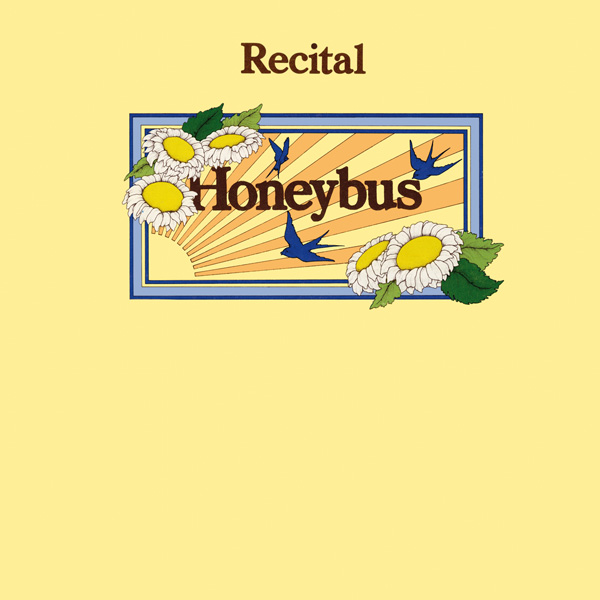
I looked it up in the Rare Record Price Guide and saw that it was valued at roughly £200. But this copy was a bit special since it had cover artwork, although Honeybus members at the time allegedly said they had never seen artwork. It was difficult to say if this was the real thing, but nevertheless I thought it would go a bit higher. So I tripled that, added some topping, and put in my bid for £666. Of course I didn’t stand a chance in hell, as someone used a bot and put in a last second winning bid at £667.
The album was slated for release in 1973 but buried by the suits at Warner Bros. after an initial single did not sell well. But after 45 years it is now finally officially released. That is cause for much celebration as ’Recital’ is a post Beatles pre power-pop bona fide baroque pop classic.
Rurally laid-back, almost anaemic, acoustically oriented, quintessentially understated English pop. Taking the Byrds and going English countryside.
Most of the album has already been made available on previous collections, ’Hidden Masters’ and ’She Flies Like a Bird’, but two songs see the light of day here for the first time, ‘She’s A Lady’ and ‘The Writing On The Wall’.
I have had the full album in various forms for some time, most recently as a signedneedle-drop CD-r directly from Colin Hare. But here the songs are housed in that original cover that appeared on eBay,and lovingly restored from Pete Dello’s own test pressing since the master tapes have been lost (by those dimwitted suits, who else!)
And the restored sound is fabulous. The violins no longer have a tendency to crackle in the upper frequencies and Pete Dello’s voice on closing track ‘I can’t say it but I can sing it’ is literally smooth as butter. Boy, can he convey feeling with small means!
But although the Honeybus sound is both fragile and frequently orchestrated, it quite honestly doesn’t really need all this polishing and Hi-Fi treatment. It is the kind of music that just sounds good regardless, because of the abundance of that special magic called songs.
Many of the songs here are in fact quite simple and even appear trivial at first listen. But from there on, they just grow with each and every listen. How is that? I can’t say it but I can smile it.
If you are buying just one album this year, this is obviously the one to get.
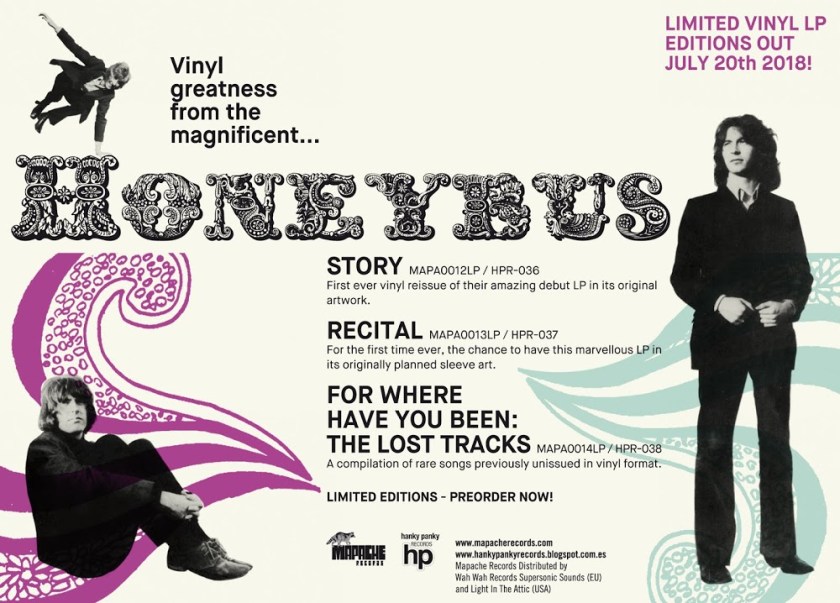
But you might also want to pick up the first-ever vinyl reissue of the only Honeybus album that did get a release back then (in 1970 and also a pop classic despite not featuring core member Pete Dello) as well as the ‘For Where Have You Been: The Lost Tracks,’ comp. All three albums are released concurrently by Hanky Panky / Mapache Records with liner notes by none other than Thomas Walsh from Pugwash.
Since I was not going to be at home for the arrival of Simon Love’s second solo album ‘Sincerely, S. Love X’ I bugged him a few times trying to get a review copy. He never sent me one, of course.
So here we are, a belated review. Your own fucking fault, Simon!
First off, let’s be clear that we live in a second hand world where nothing is new. Melodic English pop records with quirky and funny lyrics have been done before by many artists, including Julian Cope, Kevin Ayers, and of course ultimately the Beatles.
Or maybe that last reference should be to the Rutles instead. Because everything here is painted in ironic colours. The sincerity of the album title is not only offset by Simonlooking very snotty on the cover, but also sincerely tainted by expletives and a fair bit of vulgarities and smut throughout the album’s songs.
And although the subject matter of this album very much is Simon himself, it isn’t a rosy picture that we get. Opening song ‘God Bless The Dick Who Let You Go’ was allegedly written as a wedding present for his wife, and in ‘The Ballad of Simon Love’, the opening line is: “My name is Simon Love and I will never own a house.”
And that’s just two songs in.
In ‘Golden Boy’, one gets the feeling that Simon is singing about the artist that was his younger self and not liking what he sees:
“The sun shining out his arse / and lightning up everyone he meets.”
And on final track ‘Not If I See You First’ Simon conceitedly sings:
“But as the age old saying goes / you always hurt the one you love / I guess this means you must have loved me very much”
But the method here is all about the double negation. Out of the ugly dicking-about rises the beautiful swan. In a post-modern world where everything is a reference to something else and nothing is original, Simon’s irony is designed as a cleansing bath. Only after having been through that can we appreciate the honesty and passion when he sings:
“You’ve heard it all before / and so I know it’s nothing new / I fucking love you”
We fucking love you too, Simon. Please continue wearing your heart on your sleeve and make arrogant yet wildly wonderful pop records!
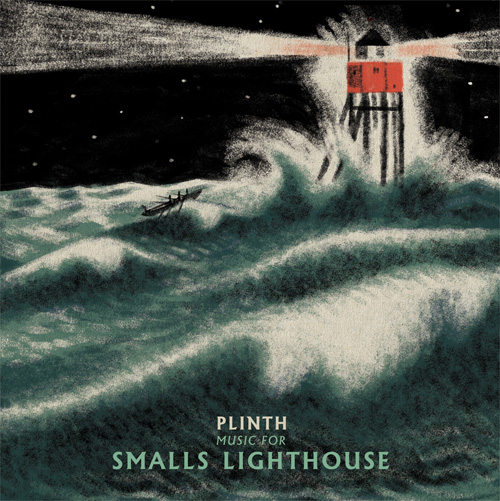
It has been five years since illustrator and designer Frances Castle started releasing vinyl albums in a style one could call Atmospherica Britannica on the Clay Pipe Music label. What better way to celebrate than to do a second reissue (the first was done five years ago!) of the most British of incidental musics imaginable, namely Plinth’s ‘Music For Smalls Lighthouse’?
Originally released on Second Language in 2010, ‘Music For Smalls Lighthouse’ has become a sought-after collector’s item and soundtracks the story of two men who decide to spend half a year in the lighthouse at Smalls Rock in Wales in the year 1800. Although one of the men dies in an accident and the other gradually loses his mind as he struggles on alone, the music is astonishingly soft, even pastoral.
There is something very alluring in this combination of inevitable disintegration and starkly contrasting harmony. An expression of our need to ultimately accept entropy, perhaps? In that sense, this album is to imaginary soundtracks what Stackridge’s ‘Original Mr. Mick’ is to pop music. The instrumentation here however is not pop, but instead points towards chamber music, with piano, violins, dulcimer and glockenspiel. But just like the Stackridge album, it combines field recordings with recorded music into a soothing and introspective whole that exerts a strong pull on the listener. An opportunity to take a pause from one’s all too productively oriented day and just bask in the moment, while somehow not being scared by the fact that there is nothing you can do to keep that moment from falling apart.
Everything crumbles. But there is beauty in decay.
As with all other Clay Pipe Music releases, there is of course also beauty in packaging. The vinyl is sea-foam green (although sea-foam as far as I know is white!), there’s a booklet telling the full Smalls Lighthouse story and the package is rounded off with the companion ‘Flotsam’ bonus disc that was also included in the original release.
That is because the initial set of digital files were made available to us Pledgemusic backers already in December 2016. We had already waited forever for the album to appear and finally it had arrived! Except it didn’t. Until last week. That’s another year and a half later!
Now, as a listener, at some point one’s patience runs out and you just turn your back on the whole thing.
But I can tell you that this is definitely not that point.
Instead, ’Carousel Kites’ remains the best pop album of [insert recent-year-of-your-choice].At least if you like ELO, Steely Dan, Van Dyke Parks or the Beach Boys.
On offer here is what Paul himself refers to as “Luxury Music”, an imaginary genre that is designed to be over-the top expensive sounding. Full of instruments, orchestral ornamentation, drama, high concept and multi-tracked vocals bubbling over with Dom Pérignon.
As it happens, Paul Steel is not the only one to be dabbling in over-the-top pop in 2018. Recently I have been agonising over not yet having reviewed the ‘Lucky Day’ album by David Myhr and the new ‘Glamping’ EP by Roger Joseph Manning Jr. Myrh shows his allegiances with a cover of Aztec Camera’s ‘Somewhere In My Heart’ and Manning Jr. even samples Queen directly. But although I know I like this stuff, I can’t seem to get really emotionally involved.
‘Carousel Kites’ is different. It sucks me in, bashes me around and spits me out on the other side feeling dizzy from the musical carousel ride. Dizzy, but happy.
Although ostensibly easy to the ear, just like with someone like Brian Protheroe, the music here is way too quirky for the casual listener. All the twists and turns have the effect of making people around you think it is noisy and irritating rather than smooth and pleasant. They ask you to turn it down rather than up. Although there might be a lot of class on display, it comes with equal measures of crash.
At fifteen tracks, ‘Carousel Kites’ is also an exhausting experience that demands a lot of effort from the listener. But that is what I love about it!
So let me end this review like I already did in January 2017: I love this album, totally and fully!
Heat haze. Lazy psummer days. Drinks spiked with elderberry. And a need for psychedelic music to keep the mind afloat. If you had too much to think last night, here are some choice cuts from the last psyx years to cleanse your brain.
Hidden Masters – Of this & other worlds (2013)
In many ways, this album is the whole reason why I am doing this list, and why I am starting it in 2013. Despite being made by a Scottish trio, it plays like a high octane take on the West Coast sound.
What it might lack in originality, it takes back in implementation. Impeccably played, with thrilling vocal harmonies, and full of stunning melodies. Jangly and catchy. This was very much my summer soundtrack of 2013 and by being so blatantly retrogressive, it achieves its own sense of timelessness.
Unfortunately the Masters subsequently went into hiding and never made another album. Still available on the net for next to nothing, so get it while you can!
Paul Lefty Wright – Songs from the Portal (2014)
Paul Lefty Wright qualifies himself into this little list already by being a sitar player. Listen to the track ‘Multani DMA’ and you will understand what I mean. But there are many other psychedelicatessen on this sprawling double album. Having been written by a guy who knows his ragas, the melodies also have a refreshing strangeness, although they are mainly being played on ordinary rock instruments.
The music is quite dark and rooted in the proto-prog years of the late 60s and labels with a somewhat gothic feel like Vertigo or Nepentha spring to mind. Nevertheless, it has its own personality and occupies its own space. Although quite hallucinogenic, the visions induced by this record are of a more esoteric and potentially scary type than those provided by the intake of illicit substances. The ghosts here are real and the afterlife always present.
Do yourself a favour and make sure to get this wonderful album. There were still 24 copies left when I last looked!
New Electric Ride – Balloon Age (2014)
Probably the most beatlesque album in this list. Listening to ‘Balloon Age’ feels like watching the world from inside the promotional and quite murky clip for ‘Strawberry Fields Forever’ with people walking backwards as much as forwards and jumping into trees to wire up proto-cyberpunk instruments. Luckily, the production values here are as tinny as an unrestored copy of that clip and the singing is aggressive enough to give the whole thing surprisingly much personality.
The New Electric Ride also avoid being tounge-in-cheek, something that helps them steer clear of comparisons with the Rutles, the Dukes of the Stratosphear or even the Junipers’ Euphonious Trolley. In fact, beyond the obvious Beatles influence, ‘Balloon Age’ does not feel derivative. Instead we get a set of adventurous tunes that are backed up by refreshingly chaotic playing and a bit of tuneful sonic experimentation. Even an homage like ‘A Submarine Song’ miraculously manages to stand on its own.
Although I am not sure this was ever on vinyl, what I imagine would be the A- and B-sides both start with vignettes that contrast quite abruptly with the following tracks in a rather satisfying way.
Before the album, they released an equally intriguing EP in 2013. Also on Bandcamp.
Schnauser – Protein For Everyone (2014)
Imagine a world where you sell your parts of your body for others to eat and you have ‘Protein For Everyone’ by Schnauser. Not only do these guys out-absurd everyone else, they also play pop in the way that the Soft Machine did on Volumes One and Two.
Great vocals and twisted organ sounds irresistibly draw you in. The real jaw-dropper is the marvellously titled ”Disposable Outcomes”; a continuous 17 minute long potpourri of ideas subdivided into shorter parts with wonderfully silly names. It starts out with a propulsive Hatfield & the North beat and Wyattesque lyric: ”And so we reach the final song / Don’t be afraid to sing along”.
I have been a Schnauser fan for years, but here they are at their very neo-psychedelic best. If you don’t like this album, then I recommend you to go see an otolaryngologist!!
Jack Ellister – Tune Up Your Ministers And Start Transmission From Pool Holes To Class O Hypergiants (2015)
Here’s an album that qualifies on its title alone. But make no mistake, it delivers in spades when it comes to content as well. Released on Fruits de Mer Records, it sticks close to the label’s ideology of late 60s worship, but thankfully does not go down the covers route. Instead, we get a playful and wide-eyed ride through a neo-psychedelic wonderland that will delight any anglophile pop lover.
Jack himself should probably be counted among those anglophiles by the way. He was born in Poland and previously fronted a band called the Yordan Orchestra in Holland.
Being quite a Fruits de Mer Records regular, he has also done many of the label’s seemingly required covers tracks, including a full album called ‘Roots Conference’ in 2017. But I would recommend sticking to his original material, including the self released and already obscure 2018 gem ‘Telegraph Hill’.
Edward Penfold – Caulkhead (2016)
What would a neo-psychedelic list be without any mention of Syd Barrett? Well, here you go, Edward Penfold is so uncannily reminiscent of Syd that one could crack a joke or two about reincarnation. While that may be most obvious on his second and in some ways superior album, ‘Denny Isle Drive’ from the following year, I have selected ‘Caulkhead’ here because it literally blew my mind when I first heard it. It was primitively recorded on the Isle of Wight with shoddily tuned rubber band guitars and sense of confused lack of preparation. Penfold’s voice is tonally gliding down and then up for emphasis here and there; and the lyrics, no matter how personal and revealing, are delivered with a sleepy yet observational detachment.
Creating this low tech and stumbled-upon atmosphere in our digital age without inviting the spectre of pastiche is no mean feat. This is the real thing.
The Junipers – Red Bouquet Fair (2016)
Soft and meticulously constructed pop of the highest order. ‘Red Bouquet Fair’ is gorgeous, autumnal and very English. That this is indeed psychedelia is very clear right after the titular instrumental intro, with the first vocal track offering up the line:“And it would seem, I had too much to dream.”
Whereas the Junipers are masters of understatement, that is also somewhat their Achilles’ heal, as nothing screams in your ears for attention. But if you give them a bit of your time, hooks that didn’t bite the first time around worm themselves into your mind and lustrous harmonies draw you into their orbit. The Junipers fully embrace the sounds of yore, from sitars to swirly sound effects, but their well-crafted compositions and captivating lyrics exists very much in the here and now.
You also need to get their previous album ‘Paint The Ground’ as both are bona fide masterpieces of the genre. Next, you might want to get the Bob of the Tops covers albums by bandleader Boryng Bison, uh, I mean Robyn Gibson.
All on Bandcamp.
The Chemistry Set – The Endless More And More (2016)
Although the Chemistry Set have been around since the late 1980s, this is only their second album proper. And what a tour the force it is. Cosmic and spaced out. It takes you there and makes sure you never get back again. While not really sounding much like the Pink Floyd, there is a kindred feeling of grandiosity here. Triumphant and almost declamatory it opens kaleidoscopic doors to the universe. Or at least to Pompeii…
With the best name of all neo-psych bands, and the beautiful Hipgnosis-like artwork, this is really an album you must own.
Since this album, the band have returned to their more typical activity of releasing a track here and a couple there. £3 on Bandcamp for their sergeant power-poppy ‘Lovely Cuppa Tea’ EP is really a pittance. And though I prefer originals, it does contain a great Moody Blues cover.
Snails – Safe In Silence (2016)
Intentionally wobbly pop music that recalls Gorky’s Zygotic Mynci at its most fragile. Just like Euros Childs, Dan Weltman’s voice has a charmingly barretesque touch of emotional isolation, while the lyrics can contrast with sly wit. Lines like “Lets get drunk and make our parents happy” could have come from the pen of Kevin Ayers…
The overall feel of ‘Safe In Silence’ is relaxed and the arrangements benefit greatly from use of trumpet, violin, cello and flute. In combination with finger-picked guitars, the sound isn’t too far away from the Honeybus, in fact. Lovely stuff.
More recently, a lathe cut EP, ‘Starting with Mine’, was released for Record Store Day 2017 in minute quantities. Unfortunately I never managed to get hold of a copy, but at least it is available digitally on Bandcamp. Recorded live in studio without the added instrumentation from the LP, it definitely comes across as more wistful.
Green Seagull – Scarlet Fever (2018)
Formed by Paul Nelson from New Electric Ride and Paul Milne of Hidden Masters and Magnetic Mind fame, Green Seagull have the dials of their inner Tardis set for 1967.
The sound is very much a combination of their previous bands. This means a very strong deference to the original psychedelic era combined with a focus on quality songwriting. The focus here is not on re-creating technicolour images and studio frippery, instead the band revel in a knowledge of late 60s music that is kaleidoscopic indeed.
From the Mamas & the Papas to the good old Beatles, it is all here, and ‘Scarlet Fever’ is an album of encyclopaedic psych-pop. As such, it can only exist now that we can cross-reference every single chord sequence and note online in a second; music that is simultaneously locked into the past and the future. A time machine that can take you anywhere. Come along, hop aboard!
Sheffield’s Jarrod Gosling is a man of many talents. He has been on the UK top twenty singles chart with electronica pop duo I Monster, and has made a brilliant album and ditto EP with his other, and darker, duo, Cobalt Chapel. He has also done cosmic folk with Skywatchers and instrumental prog with Tim Bowness in Henry Fool. Speaking of the latter, Jarrod won the UK Prog Awards Album Cover Of The Year 2017 for his artwork on the Tim Bowness LP ‘Lost In The Ghost Light’.
But I like him most when he does something with his Regal Worm band.
After nigh on four years’ wait, now the third album, ‘Pig Views’, is finally here. With a quite Catholic-looking image depicting a woman with a child holding a piglet dressed in baby clothes, framed by stylised and neon-coloured woodlands, it could well win that cover award in 2019 again (nominations for 2018 are already closed).But it really should win the best album award this time.
In fact, this is the prog album you should buy if you don’t like prog rock.
And if you already like prog rock, well open the windows and let in this breath of fresh air, for heaven’s sake!
Although Jarrod probably plays at least fifteen different keyboards here, there are no solos. And there’s no pretentious bullshit.
By the way did I say there is also plenty of Mellotron and that this album is the third in a trilogy? Or that the whole thing was originally planned as a concept album? And that it ends with a twenty minute suite?
Like I sad, no pretentious bullshit!
In a2014 interview, Jarrod told me that “I don’t think prog should be too serious, that’s why a lot of people don’t like it!” That still applies. ‘Pig Views’ takes all of prog’s trappings, throw them in the blender and spray them on the walls around you in beautiful patterns, like a disco light on your most fun night out.
The keyboards come off like Egg playing James Last. But instead of odd and technically advanced time signatures, Regal Worm is much more about percussive tempo shifts.
And the abandoned concept was about a flying pig creature. Hmm, flying pigs? Didn’t some other prog band use that idea…
But just because this is fun doesn’t mean it is to be taken lightly. The music here is ambitious. There is drama, and steep drops; operatic choruses that would feel at home on a Magma record; and passages that are as fragile as they are beautiful.
Musical and lyrical themes weave in and out from previous records. In fact, the very first digital single from 2013 was a version of ‘Jag Vet’ from the new album and the second EP opened with an alternate version of the opening track.
The first EP was called ‘Sausages’ by the way. But of course.
There are, however, new and interesting themes here as well. Some lyric snippets immediately stick in your mind, like on the track ‘Pre-Columbian Worry Song’:
“Slip off the edge of the world
Life’s a banana skin”
That captures the feeling of listening to this album pretty well.
Then there’s the church-like feeling of ‘Huge machine, you are so heavy’ where the title becomes a sacral chorus totally at odds with its meaning. The juxtaposition of hard and soft may be simplistic, but it is nevertheless memorable.
This is not just a great album. It is a significant one. Together with ‘Use And Ornament’ from 2013 and *Neither Use Nor Ornament’ from 2014, it completes a trilogy of albums so full of conceptual incoherence, charm, humour, melody, musical mischief and invention that Gong’s ‘Radio Gnome Invisible’ comes to mind, despite sounding not at all like that.
So many brilliant releases that making a top ten list was undoable. Dear mr. Blind Clockmaker, why did you give us ten fingers? We need fifteen!
There were also lovely albums released by Artificial Pleasure, Kadhja Bonet, Cheer-Accident, The Fierce and the Dead, Mark McDowell, Gruff Rhys, the Trembling Bells and Kamasi Washington, but I felt they did not push my buttons as hard as the ones I am listing below. You should still get them off course, they are sincerely great!
Anyway, here goes. In alphabetical order, as always. But if I had to pick just one album, it would be Crayola Lectern’s ‘Happy Endings’. Instant wyattesque classic, hands down.
And the Zuider Zee album is outside contest – almost up there with Big Star… on a pedestal all of its own.
So that is all for this quarter. But Q3 is already looking great. We will finally see the third instalment of the Regal Worm trilogy of albums. And it is is every bit as good as the previous two, I will post the review as soon as pre-orders go live.
Fittingly for a third quarter, there will also be another third instalment, namely Sanguine Hum’s Buttered Cat saga closer (?) ‘Now We Have Power’. I have been enjoying this album since December of last year and I was seriously worried that it would not get a release, as it is, well, a bit too progressive to fit in that rather conservative genre they call prog. Very fragile. Very beautiful. And complex.
Just a few short lines to say that Ralegh Long has a new single out today, his third this year. Not unusually for Ralegh the only sounds are voice and guitar, but this time it is just one take, no overdubs. And it is absolutely brilliant. And once more, the atmosphere of Nick Drake is quite tangible as Ralegh caresses sounds out of his guitar and somewhat reluctantly sings the wistful lyrics about wanting to be ‘Where You Are’.
You immediately know that there will never be closure. The whole things is achingly beautiful while at the same time satisfyingly complete as an expression of a complex yet very relatable feeling.
I understand from Ralegh that he is currently writing a lot and that we might be expecting more from him upwards of summer, maybe in September. That is indeed something to look forward to, but in the mean time, get this and the previous 2018 singles ‘Super Blue Moon’ and ‘Am I Home’. And get his albums too if you don’t have them, they are such gems!






 Popgruppen