The definitive British baroque pop compilation

come-join-my-orchestra-box-set

How do you describe that rare sense of wonder that makes you sit up straight as a candle and listen? At least, that is how I felt when putting on “Come Join My Orchestra: The British Baroque Pop Sound 1967-73”.

A new compilation curated by David Wells is always cause for celebration, but although this one covers 1967-73 there is, thankfully, no mention of psychedelia. Instead, this is about a pop genre that may or may not have been accidentally invented by McCartney when he had the idea to use a string quartet for ‘Yesterday’. Legend has it that British baroque pop was born in that moment. But even though it was there right in front of everyone, the world didn’t notice.

And that is easy to understand. There is little if any testosterone. Voices have an unshakable air of naivety. The pace is slow and the atmosphere is generally very intimate. Bedroom pop played by made-up chamber orchestras.

And I love it.

In fact, some of what is on here belongs to the standard by which I find myself measuring music: Mike Batt, Honeybus, Fickle Pickle, 10cc (represented here as Festival, one of their many Strawberry Studios incarnations, but nevertheless), Tony Hazzard, Stackridge, to name some of them.

British baroque pop isn’t exactly exhaustively compiled. The only other officially licensed compilation, ‘Tea & Symphony: The English Baroque Sound 1967-1974’ was recently spotted for €150 on Discogs but isn’t available at any price anywhere as I write this. 

You can still buy the ‘Ripples’ compilation series but then you have to apply your own quality control as it collects soft pop in general. You would then be better served by the unofficial, yet trail-blazing Fading Yellow compilation series, now up to 16 volumes. 

But now this release gives you a choice, which is really David Wells meets Fading Yellow, without necessarily crossing paths. Partly this is due to the fact that we to an extent have David Wells compiling David Wells compilations here. So from his previous labels Tenth Planet and Wooden Hill, we find artists such as John Pantry, Howell and Ferdinando, Angel Pavement, Forever Amber and Five Steps Beyond that at least I would never have heard otherwise. 

As an example, when ‘The Upside Down World Of John Pantry’ was first released on Tenth Planet back in 1999 it forever changed my world of pop music. There was something pensively dramatic yet well-arranged and catchy to Pantry’s music that struck a deep chord in me.

And then there are artists like Bill Fay, Clifford T. Ward, The Alan Bown!, West Coast Consortium, Billy Nicholls and The Freedom who were slightly more known – but where David Wells added a whole new dimension by compiling their back stories. If you don’t have their David Wells compilations, you are missing essential pieces of the very fabric of pop music.

And it is all here represented here. Incredible stuff. But even though I have collected all of the above, there were still a full 19 tracks that I had no clue about. I can only listen in awe and be grateful to David Wells for again leading me down new paths of discovery. As a result, I have in fact already bought three LPs and a couple of singles on Discogs.

Finally, a minor complaint. I am afraid that a lot these tracks actually come from vinyl records and not from master tapes, yet this crucial information is nowhere to be found. For example, the Mike Batt track “I See Wonderful Things In You” seems to be very close in sound quality to the single I already own, so I assume it is unfortunately not from a master tape. But if the master tapes really exist, I would so much want a compilation of Batt’s late 60s singles. Could there be outtakes?? I would so love to hear them in that case! 

Speaking of Mike Batt, his protégée (or alter ego??) Vaughan Thomas put out a long string of singles and a great self-titled LP all in the time frame for this compilation. It is all baroque pop to the gills, and not including a single track or even a mention of Vaughan Thomas here is the one decision Davide Wells made that I don’t understand. 

Please David, if anyone can also give us the definitive late 60s Mike Batt and early 70s Vaughan Thomas story, it is you!!


https://www.cherryred.co.uk/product/come-join-my-orchestra-the-british-baroque-pop-sound-1967-73-various-artists-3cd-clamshell-boxset/

Papernut Cambridge play the toy Mellotron

a0793353907_10

I was a bit skeptical to a ‘Mellotron Phase Volume 2.’ After all the idea of library music seems almost meaningless today when YouTube can present you with any sound in a second. And whereas a first volume was both fun and refreshing, making an actual series out of this is something else.

But as it happens, this is totally different from the first instalment. At first, I thought this was just another Mellotron album – after all, there is a picture of one on the cover. So I was quite confused when I could not find my bearings. Sure, there are swaths of the typical wobbly strings here and there that we all know and love. But mainly there are other things going on here.

And most of that is about the early 70s rather than the 60s. Thankfully, as it is less explored.  It wasn’t until I heard the track ‘Parker’s Last Case’ that I realised what was going on. I perked my ears and thought “Hey, they use that sound on the Persuaders’ signature tune!”

So the 70s it is and that’s where this gets really interesting and totally new for me. It turns out that the toy company Mattel, who makes Barbie dolls and whatever, for some unknown and unknowable reason had purchased the Chamberlin patents as well as some other organ technology related patents. Now the Chamberlin was actually the pre-cursor to the sacred Mellotron and here we have a giant toy maker trying to turn it into a entertainment thing for every family. 

Their little frankensteinian monster was called the Optigan and you could load it with celluloid LPs containing pre-recorded accompaniments. The buttons that marked these accompaniments were marked in three rows of “Major,” “Minor” and “Diminshed.” All keys were numbered so you could literally play by number-sheets and there were also buttons for effects and even reverb on some models. 

The Optigans didn’t sell well of course as they were probably all too advanced for kids anyway and all too shoddy sounding and plastic to be considered by grown-ups as instruments in their own right.

So Mattel dropped the whole thing after a while – and being the kind of dinosaur they are, they are probably sitting on those patents even to this day, not knowing what to do with them and not even caring.

But the thing is that there were as many as 40 of those plastic discs made; each containing a single lead sound and a grab bag of accompaniment rhythms and effects. Luckily, the majority of those discs have now been collected in an OptiTron Expansion Pack for the M-Tron Pro – and that is actually what Ian Button and his parpernutty bandmates are using on this disc. More specifically, they have taken one such rhythm accompaniment as the basis for each track and then added Mellotron and Chamberlin sounds as well.

So here you have a record that is guaranteed to confuse you if you are in any way a Mellotron lover. The sounds here are simply subverted and transformed. For starters, there is much less wobble – probably an effect of switching from tape to disc. And out with the wobble goes the darkness. Instead you get a range of more preppy and happy sounds; while others have a whooshing quality to them that is quite nice. It is like meeting the Mellotron’s unknown sibling at a cocktail party.

Altogether amazing!

Testbild! make the parts greater than the whole

a2414694153_10

The theme for the new Testbild! album ‘Stad’ is the city. An appropriate title as cities pulled the band apart when most members left Sweden’s second largest city Malmö for Stockholm. Simultaneously, it was the second largest city, Gothenburg, that presented the opportunity to record this new album in Sonores Studios.

So while Testbild! isn’t really a band anymore, we have a new album. And that is cause for celebration. Their experimental pop is extremely tuneful, beautifully arranged and innovative. Grounded in Bacharach rather than the Beatles or the Beach Boys, they plow a post-punk furrow of their very own.

Having said that, the parts of this album are definitely greater than the whole. City life provides diversity, and so does this album. The flip side of diversity is incoherence and that is where I would place this as a listening experience.

The title track is a 16 minute freeform improvisation. A quite suggestive piece that makes me think that the title might better translate into “town” than “city”. Although it does get a bit noisy at times, it doesn’t feel like the stress and speed of a big city. Maybe suburbia then?

By being so different to the other tracks, the title track structures the album into three parts: A longer intro of pop songs, title track, and a shorter outro of pop songs.

The first track that really grabs your attention is also city titled, ‘Vita Staden’ (that would be ‘The White City’), sung by Petter Samuelsson. It starts out with jazzy drums and a sumptuous melody line fusing Rhodes and clarinet, and an atmosphere of urban innocence that you can’t help but surrender to.

The song turns out to be a microcosm of the album itself; not only is it steeped in a suburban feeling, it also replicates the three part structure with a longer pop intro, an experimental middle section containing sounds found near a pedestrian crossing, and a shorter pop outro.

But I would argue that the ultimate gems on this album are the more subdued tracks sung by Petter Herbertsson. Easier to overlook at first listen maybe. I am talking about tracks like ‘Skymningens kritiska punkt’, ‘Stram arkitektur’ and ‘Betongens form’. These songs absolutely nail every angle; songwriting, arrangement and performance. 

And the lyrics fully capture the importance of making music in your native language; they are crisp, poetic and political yet devoid of cliches. For example, the first verse of ‘Betongens form’ goes like this:

“I betongens form / visar sig en tro på människan

Kollektivets kraft / cementerar drömmar

Välvda tak i takt / rytmen från maskinerna slår dag och natt

Året om dom ger / en oavbruten atonal…”

Taken out of context, that could almost be from a 1970s political prog album. But here, Petter’s shy to the point of I-really-try-to-pretend-I-am-not-here delivery creates an incredibly intimate environment that sucks you in and gently nudges you into the gently powerful release of the layered choir of the verse ending: “… symfoni”

I can play that single part over and over and over and still get a surging and tingling sensation every time. Honestly!

The second verse ends with the same mechanism although the words are different and suddenly it feels like a chorus. Simultaneously minimalistic and totally luxurious – and absolutely masterful.

So, while ‘Barrikad’ remains Testbild!’s masterpiece – this new album may actually contain some of their best pieces ever!

Sanguine Hum in tailspin

a2931807501_10

A cat always lands on is feet. And a piece of toast always falls to the floor buttered side down. So if you attach toast to the back of a cat and throw it into the air, simple and sound physical principles dictate that it spins perpetually without ever touching ground.

That a spinning cat could be used to generate power is the key idea driving the story in Sanguine Hum’s buttered cat saga, which reaches its conclusion on ‘Now We Have Power’. And if you are already smiling, this is an album for you.

Whereas the rock albums in the 70s often had half-baked attempts at telling some kind of story, Sanguine Hum are in a different league altogether; this story has been considered both for a book and a film.

Apart from a cat spinning on it’s own axis, the main plot itself is built on the same principle and ends where it begins, forever turning like one of Escher’s famous paintings. And importantly, this album also makes other circles whole. It sees the return of Paul Mallyon on drums, thus marking the reunion of the original incarnation of the band. Paul’s drumming adds a new level of vitality and flow to the music. Furthermore, with the inclusion of the song ‘Pen! Paper! Paper! Pen!’ there is also a (brief but nevertheless) straight return to the band’s canterburian roots.

But this is not an album about looking back. Sanguine Hum are all about moving forward. 

Over a series of albums, they have developed a unique and instantly recognisable sound built on the combination of opposites; lush simplicity vs. multilayered complexity; teamwork vs. individual excellence; restrained control vs. bubbly flights of fancy; musical accessibility vs. lack of strophic forms.


The album starts out memorably as a subdued drama with Matt Baber playing some foreboding bars on piano (which has much stronger presence than on previous albums) before Joff Winks’ smooth voice comes in to pick up the tale. Although the opening is a highlight in itself, the album never really lets down from there.

‘The View Part 2” continues with a huffing and puffing locomotive sound that in a way pulls the listener onwards.

Then there is the magnificent instrumental ‘Skydive’ where the quartet really lifts off, aided in particular by Matt’s synths and Brad Waissman’s lyrical bass.

‘Bedhead’ feels like a centrepiece on the album. It starts beautifully with picked acoustic guitar and plinky keys, but then Joff’s lone voice comes in and adds the sense of purpose, foreboding and tension that permeates this record:

“Speaking gently / you understand

We just need that / helping hand

To find our way from / the mess we’re in

It’s all got rather / out of hand”


Although the story was written a decade and a half ago, the timing for its release now is perfect. After coincidentally having started a world war, protagonist Don becomes de-facto global leader, and starts bringing society down all around him from the moment he gets the power alluded to in the album title; it instantly corrupts him. All incredibly trumpian.

Another unforgettable moment is when ‘Speech day’ fades in with a tune played as Sanguine Hum’s original band incarnation The Antique Seeking Nuns, which then eventually segues into Don’s deceitful speech to the masses about how to solve the crisis at hand.

The album ends with ‘Swansong’, a tune that again starts out acoustically, but soon that chugging locomotive sound creeps back in and the initial sense of escape and relief is painted over with something more claustrophobic. The end, in this case, turns out to be a dark beginning.


‘Now We Have Power’ is a demanding listen. If you like me wrote your doctoral thesis on self-referential systems, then you know you have reached the gödelian zenith of music making right here. But if you did not, I would still beg you to give the album a chance. It is a genuine marvel and is guaranteed to grow in stature for years to come.

And although the buttered cat story is brought to its conclusion here, it never ends. A new album is reportedly already written, and I expect there are still some missing cogs in this hilarious tale!

10 best albums Q3 2018

recital-per-anunci

(in alphabetical order)

The long hot summer of 2018 saw slightly fewer interesting new releases compared to the first two quarters. In a way that is great because I managed to stick to just ten albums (and a comp!) on the list without having to leave more than a handful of great things out.

But the Q4 list is already halfway filled with essential stuff… See you there soon!

The Goon Sax – We’re not talking


Gryphon – Reinvention

http://www.thegryphonpages.com


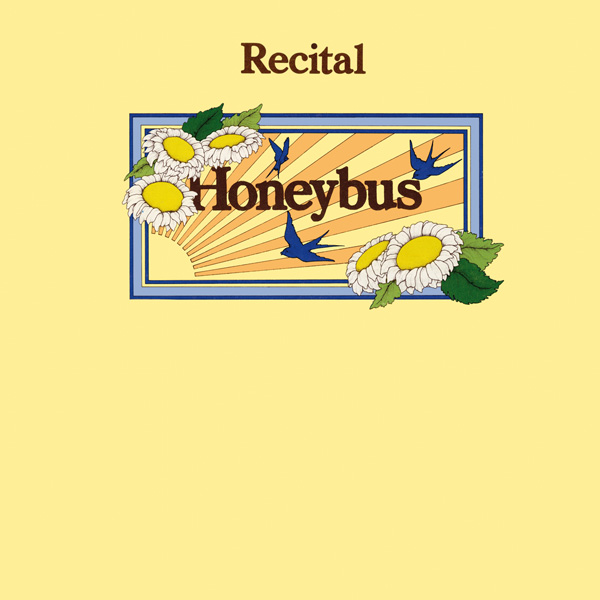
Honeybus – Recital

https://hankypankyrecords.bigcartel.com/product/honeybus-recital-lp


Lemon Twigs – Go To School

https://www.youtube.com/watch?v=4pzEEbOrJRg


Simon Love – Sincerely, S. Love x


Low – Double Negative


Paul McCartney – Egypt Station

https://www.youtube.com/watch?v=okqNDGSNUUI


Mull Historical Society – Wakelines


Spiritualized – And Nothing Hurt


Alexander Tucker – Don’t Look Away


Best compilation Q3 2018

Bob of the Pops – Volume 3

Gryphon reinvent Alice in Wonderland

reinvention

Sometimes people sigh at me for being such an anglophile. And in these Brexit times I am increasingly seeing their point. The insular attitude of the Brits is not exactly helpful at the moment. 

But then a strange oddity like Gryphon’s new album ‘Reinvention’ comes along and makes me forget all of that.

You really have to be a bit insular to make an album like this.

Gryphon were a band that got away with putting out albums of medieval music back in the 70s by adding drums and amplifiers to their crumhorns, lutes, flutes and whatnot, and calling it prog.

Here they are back with their first album in 40 years or so, with all their original members (except Richard Harvey) chipping in together with some new recruits. 40 years might seem like a long hiatus, but in the medieval perspective it feels just like yesterday.

And the new album can easily be compared to the original ones, as the nice folks at Esoteric Records are just now releasing a double CD with remastered versions of all the original albums. Particularly, the irresistibly titled ‘Midnight Mushrumps’ and ‘Red Queen to Gryphon Three’ are highly recommended albums as far as I am concerned.

Although Gryphon got away with calling themselves a rock band back then, they really weren’t. And they still are not. How about music for a Robin Hood reunion party? Even the singer sounds like a bard at King Edward’s court. Well-articulated and declamatory as if trained to make himself understood to a large crowd without extra amplification.

In any case, a track like ‘Haddock’s Eyes’ is exactly the type of thing I simply adore. 

‘Haddock’s Eyes’ is a term for the name of a song sung by The White Knight in Lewis Carroll’s ‘Through the Looking-Glass’, in chapter VIII to be exact. It involves a lot of convoluted play on different levels of symbolisation, which you can read more about elsewhere. The whole thing is just plain silly, while somehow managing to be not contrived and really quite smashing.

It is in fact all the way up there with Mike Batt’s musical rendition of ‘The Hunting of the Snark’. 

And by the way, the Brits will suffer more from Brexit than the rest of us. So keep calm and carry on, if that really is what is needed to keep this kind of music flowing.

http://www.thegryphonpages.com

Only a Gibson can better a Gibb

I don’t like cover albums. I really don’t. But now I am going to try to convince you to listen to one anyway. Because, how can you not like Robyn Gibson a.k.a Bob of the Pops? 

Cover versions are often made out of speculation, or they are sloppy homages, or just simply pointless. But the choices Robyn makes convey both his love for the music and deep insight into the minds of the original songwriters. His versions actually add something where detraction is the unfortunate norm.

Robyn recently released the third instalment in his Bob of the Pops series, again as a free download. I mean, you can’t even pay what you want. And I for one certainly would want to pay for this!

But apart from the price, there is nothing cheap here. On the contrary, the sounds are genuine and the bisonaroundsuspectosound production is tasteful down to every detail. 

Apart from a few guests this time round, we are left in Robyn’s exceptionally talented care for the whole thing. As an effect, that gives a coherence to the songs although they originate from many times and places.

It also inevitably makes me think of the Fading Yellow compilation series, which stands out for its uncanny coherence in production values – and the genre here could indeed be called Fading Yellow.

When listening, you are immediately torn between wanting to put on the originals to compare and being totally fascinated by the stuff you haven’t heard before. It is like peeking into someone else’s record collection and realising that it just has the great stuff without all the fluff that’s in your own.

And suddenly, giving this away for free starts making some sense. The Bob of the Pops albums are an invitation from a fan to other fans to a conversation about what makes pop music good. In addition, it eliminates elitism about taste from the get go. Robyn has spent a lot of time listening to music but rather than be the expert who dictates to others what is good, he is simply sharing his love for this stuff. And I am certain that he would be thrilled if listening to this makes people actually continue on to the originals.

The album opens with a sunny version of ‘When Your Light’s Turned On’ from the ‘Evolution’ album by the Hollies. It makes for easy yet glistening listening and sets the tone for what’s to come: More pop than psychedelia and more sweet than sour.

But it is soon evident that easy in this case certainly doesn’t mean shallow. The treatment of the Bee Gees ‘Craise Finton Kirk Royal Academy of Arts’ is… in fact better than the original. 


It starts off with just piano and voice like it should, but about two thirds in the sound expands to a full band treatment before going back to just the voice from the intro and ending on the song’s signature lone piano note. 

It seems so obvious that at first I thought that’s the way the Bee Gees did it. But they didn’t. I even had to listen to an alternative version just to make sure the full band part wasn’t there either. Although it sounds so much like a Bee Gees thing, it just isn’t there.

It takes a Gibson to better a Gibb. And a genius one at that!

A track that I had to search deep for in my collection is ‘Bathroom Wall’ and I can’t say I properly remembered it. Thanks Robyn for putting this catchy 1968 B-side by US band the Tokens with roots back to Neil Sedaka in the mid 50s back on my playlist!!

The totally new acquaintance for me this time around is Joe Pernice. To be honest, I am still not sure who this guy is, but I went straight ahead and ordered his ‘Big Tobacco’ album. 

“So help me Lord, get me stoned again” sings Robyn with an irresistibly bittersweet voice, but despite the drug reference this is not a 60s song. The original release is from 2000 and like the covers of songs by Andy Partridge, Julian Cope and Elliot Smith help extend the album through time.

Another killer track here is ‘Goose Step Mama’. The original is a spoof track by Neil Innes’ Beatles tribute band the Rutles. Doing a serious and honest Rutles cover again – after having done ‘With a Girl Like You’ on volume 1 – is cool because it places Neil Innes where he should be, namely among the originals.

But there is one thing that worries me with this release. Volume 2 came only a year ago, but it has been two years since the latest release by Robyn’s proper band, the Junipers. And I, for one, have been counting the hours ever since.

Every single Bob fan in the world now screams for a new Junipers album!

The Lemon Twigs get thorny

lemon twigs_go to school

With last year’s ’Do Hollywood’ the young D’Addario brothers that form the core of the Lemon Twigs charmed the world with their wide-eyed, theatrical and fun pop.

But with their new album, a rock opera about a monkey that gets adopted and goes to school, their honeymoon with the critics is over.

And it is easy to see why people now either seem to love or to hate, rather than just simply adore the band. ’Go To School’ is as hard to listen to as ’Do Hollywood’ was easy.

Long, story-focused, less catchy, and sounding like the illegitimate child of a Broadway musical and a 70s music hall performance in Brighton, this certainly is a mouthful.

In fact, ’Go To School’ reminds me of the original soundtrack version of ’Tommy’, the one with all the guest performances by Elton John, Jack Nicholson, Tina turner and so on. Except now the guest stars are Todd Rundgren, Jody Stephens and daddy D’Addario – people who feel more like survivors from the 70s than stars by now. In any case, the comparison isn’t flattering as the movie version of ‘Tommy’ isn’t very good – although the Who’s album version is.

In other words, ’Go To School’ sounds like the movie is the main event and not the music. Only, there is no movie.

Yet, the Lemon Twigs are making things difficult for themselves here in a very interesting way. When they could have just gone ahead and tweaked things from the previous album just a bit and landed safely as the new indie-rock wunderkinds, they have taken a left turn and gone full speed into something else.

Exactly what, I don’t think we know yet.

So while this is not their masterpiece, ’Go To School’ certainly shows their huge ambition and their willingness to risk what they have gained so far. It very clearly promises that there is much, much more to come. The album is also an exhilarating listen in its own right, as it really makes you sit up straight and wonder what the hell is going on. Certainly one of the best albums of the year.

King of pop, still on top

paul mccartney_egypt station

Obviously, he was in the Beatles.

But then Paul McCartney together with his late wife Linda made ‘Ram’ in 1971. Although it was dismissed and derided by critics on release (to the point that Paul never played it live), as far as I am concerned it is one of the few perfect pop albums ever made.

I did not grow up with the Beatles. I grew up with McCartney, and ‘Ram’ was my rosetta stone to music.

His new album ‘Egypt Station’ is not on that level. Neither is it a new ‘Band on the Run’ or even a ‘Tug of War’.

But it might just be up there with his unexpected late career return to form ‘Chaos and Creation in the Backyard’. What we get here is a surprisingly sprawling volley of ideas and hummable earworms that bear the inimitable McCartney imprint. 

Silly? Yes. 

Trivial? You bet. And particularly songs that try to get away with titles like ‘Fuh You’.

Insolent? More than you’d expect from someone aged 76. 

But hey, this is pop music, not a dissertation on the quantum energy fluctuations of quarks. And really great pop doesn’t have to take itself seriously to be full of joy, life and relevance.

‘Egypt Station’ entered the US album charts at #1, and started at #3 in the UK. So given that there are reviews of this album all over the internet by now, I won’t go into detail. Suffice to say that although music that sells well is generally bad, this album is one of those exceptions that prove the rule.

In other words, Macca is still top of the pops. And as long as he is, the world will keep on turning.

The Goon Sax really are talking

If I hadn’t known that I was listening to the second album by Brisbane, Australia pop trio The Goon Sax called ‘We’re Not Talking’ I would have guessed that this was a hitherto unknown archival recording by the Go-Betweens.

And if that isn’t praise enough to immediately want to go and get this album, then I should say that although Robert Forster’s son Louis Forster is in the band, they don’t only manage to capture the frail and wonderfully imperfect perfection of the early Go-Betweens but they also manage to add an internet era teenage perspective that very much puts them in the here and now.

And I said teenage because the Goon Sax are still just 19-year olds and fresh out of high school. Their coming of age angst balances perfectly against the music that manages to stay wide-eyed while not in reality necessarily breaking new ground. Although their first album ‘Up To Anything’ was quite an eye-opener, I couldn’t shake the feeling that they tried a bit too hard to punch above their age. Here, they are more comfortable in their own age, and manage to convey the freshness and insightfulness of youth at its very best.

This is also the album where drummer Riley Jones steps up as a personality that is every bit as strong as Forster’s and James Harrison’s. Although she completes the comparisons to the Go-Betweens by being the female drummer behind the two boys trading vocal duties as well as bass and guitar up front, here she effortlessly goes beyond that role. Her songwriting and vocals add both complexity and nerve, particularly on ‘Strange Light’, turned by Jones’ slightly detached yet simultaneously heartfelt voice into one of the album highlights.

Production is also kept to a minimum, which is not to say that it is lacking in any way. On the contrary, the soundscape has grown quite a bit, but neither strings nor horns detract from the overall spartan atmosphere. 

The Goon Sax capture the same joyful amateurism as the early Go-Betweens, but if anything it is balanced with more solid playing skills. Still there is that feeling of just the right amount of discord that could just be unintentional, but in any case doesn’t feel calculated.

It all adds up to one of those pop albums that are simply irresistible. Just wow!