Just realised I didn’t post ANYTHING here last year. But despite everything that is going on in the world, there’s still lots of really great new music. That’s at least a comfort...
Tried to get the list down to just 10 albums, but that simply wasn’t doable!
12 Best New Albums (alphabetical order)
Tatsu Akiba – Akiba Tatsu
Emmett Elvin – Optimal Eternalist
Craig Fortnam & Laurent Valero – Empty Vessels
Heavenly – Highway To Heavenly
Hen Ogledd – Discombobulated
The Leaf Library – After The Rain, Strange Seeds
The Monochrome Set – Lotus Bridge
Spencer Cullum’s Coin Collection – Vol 3
Sternpost – unworld.afterpop
Tinned Meats – Kilter
Whelligan – In Pursuit of Inchoate Visions of Beauty
Bobby Zodiac and The Clairvoyants – !
Best Compilation (of new stuff)
Railcard – Railcard
Best Archival Releases
Flaming Star – In the Piper’s Magical Kingdom
Flood – A New Way Of Living
Heaven – The Invisible City of Kartesh
The Don Rendell / Ian Carr Quintet – Mirage (Landsdowne Books)
Keiron Phelan & Peace Signs – The Whole Band Just Turned Mellow
Lunophone – Surroundings
The Smile – Wall of Eyes
Testbild! – Bed Stilt
Kugelschreiber – Cheerleaders
The Martial Arts – In There Like Swimwear
Tom Penaguin – Tom Penaguin
Honourable mention
Craig Fortnam – Bespoke String Trios
(I commissioned a composition on this album. Being partial, it felt a bit odd putting it on the top list, but everything Craig Fortnam touches is magical.)
The 11th best album of 2024
The following 20 albums are all number 11 – music is not a competition, and they are all great! Listed as randomly as possible.
Hamish Hawk – A Firmer Hand
Simon Fisher Turner – Instability of the Signal
David deBarra – All My Dearly Beloveds
Richard Wileman – The Forked Road
Field Music – Limits of Language
Plantar – Sketches
Dirk Mont Campbell – Long Time Gone
Bill Ryder-Jones – lechyd Da
Matt Baber & Richard Wileman – Baber / Wileman 2
Stephen EvEns – Here Come The Lights
Gong – Unending Descending
The Cure – Songs of a Lost World
Peter Perret – The Cleansing
Midget! – Qui parle ombre
Willie Dowling – The Simpleton
Y Dail – Teigr
The Lemon Twigs – A Dream Is All We Know
Mothboxer – Twelve
Picturebox – Mobile Disco
Naima Bock – Below a Massive Dark Land
Single of the year 2024
The Poppermost – I Don’t Want To Know
(I never usually list singles – but ‘I Don’t Want To Know’ is just so good, I thought you might want to know!)
Brilliant art pop band The Great Crash recorded around 45 high quality demos in a derelict South Wales barn between 1972 and 1975. Those demos are now surfacing. Michael Björn talks to Al Gray and Nick Smith about their fantastic second archival release, Too Many Late Nights.
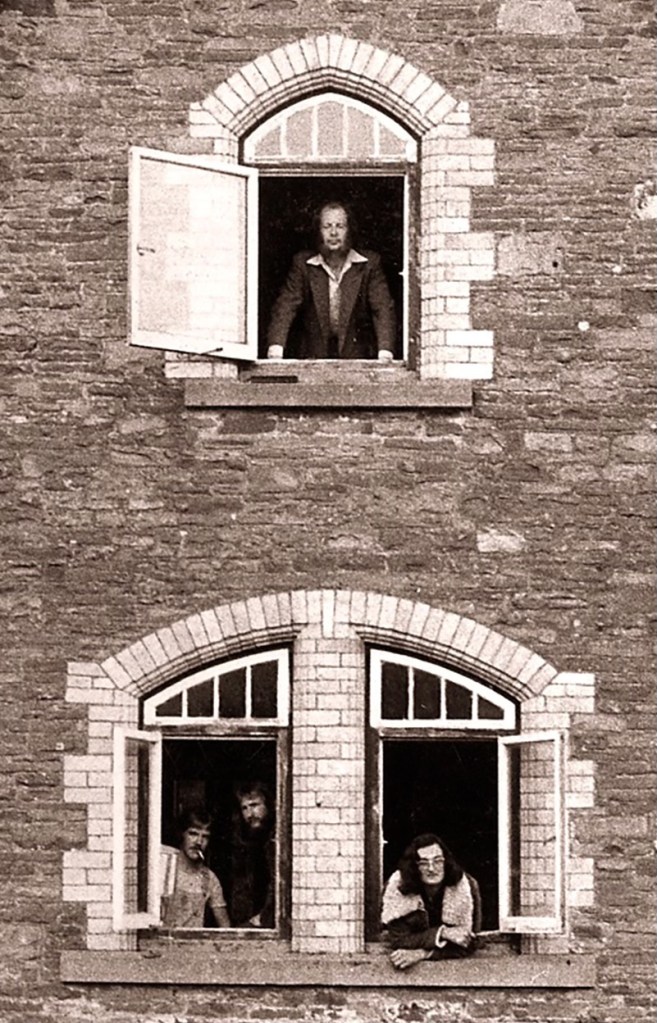
The Great Crash: Al Gray, Piers Geddes, George Benn, Nick Smith (photo: Nick Smith)
In 1970, Alan Gray, drummer Piers Geddes and some friends made a privately pressed concept album called Bertie. “It was a joke. Tommy had just come out. I thought it was a load of rubbish, so I thought I’d do my own,” says Al. “We sent a copy to John Peel, just for a laugh. But he liked it and actually replied.”
Meanwhile Nick Smith and George Benn were performing as an acoustic duo. “We were all in Southampton University,” says Al. “They were playing gigs at the university, and said ‘Why don’t we join up?’”
Initially calling themselves Springheel Jack, they recorded a good handful of acoustic tracks at IBC studios in London produced by Damon Lyon-Shaw. Unfortunately, the acetate has since been lost. Shortly after, they auditioned for Shel Talmy. Arriving early, they had a pint at a nearby pub, where out of nowhere someone slugged Piers on the nose. “There we were in Talmy’s office, with blood pouring out of Piers’ nose,” comments Nick. “Probably blew our chances.”
(decal by Gerry Thurston)
Having had a little success as an acoustic group, they decided to try going electric. Piers had found out that a relative of his had the remains of an unused, run-down country mansion, Plas Llecha, in Monmouthshire, South Wales with a barn where they could set up equipment and practice, so they decided to check it out.
“We had two extra members at that point,” remembers Al. “But when their girlfriends came down to visit, they were horrified at the living conditions, grabbed them by the scruff of their necks and took them home.” For the remaining foursome the week turned into a month and the month turned into a year. They ended up staying on for nearly three years, sustaining themselves on home-brewed beer and home-recorded music.
After having recorded a number of demos as the Great Crash in 1972, Al sent a tape to John Peel thinking Peel might remember him. ”He did, and he liked the demos,” says Al. Peel invited them to record a session for Sounds Of The Seventies. Sadly, the recording was far worse than their demos. ”We were the guinea pigs for the BBC’s new 8-track recording facility,” says Nick. ”They didn’t have a clue what they were doing.”
Although the session was aired twice, it lead to nothing. “Our our manager was always on the verge of getting us that elusive deal,” says Nick “When it finally happened, it was a complete disaster.” In 1974 they finally signed an album contract with Polygram. The producer, Emil Zoghby, came to Wales for a week to rehearse before going to the studio. ”He brought with him a vial of liquid cannabis, which he encouraged us to dip our Players No. 6 cigarettes into,” remembers Al. “Obviously, the rehearsals were quite fun, but not very constructive”.
After several all too relaxed days at Plas Llecha together with Emil, they again met up for a week of recording at Polygram’s Bayswater studios. “By the time we got into the studio, they had no idea what they wanted us to do,” says Al. Still, they went through the process of recording an four tracks, and then went back home without having heard so much as even a rough mix.
“Polygram sent us the mixes a week or two later. They basically had put in everything, their kitchen sink was probably in there somewhere as well: Brass section, a couple of extra guitarists, everything, “ says Al. “Somewhere buried in the middle is our little band, you know? It was hopeless. They obviously had no idea.” As the person who had signed them had also left Polygram, the album wasn’t happening and at the end of 1974. Sadly, the whereabouts of the master tapes are unknown.
And even more sadly — the failed record contract spelled the end of the band.
But — in 2003, Nick and bass player George got together, dug out all the surviving Plas Llecha demo tapes and digitalised the lot. A first compilation was eventually released on Seelie Court in 2021 as Deadfire Echoes, and now comes an even better collection, Too Many Late Nights, focusing mainly on their later and more complex material.
While initially having been two songwriting teams, Nick and George on the one hand, with Al and Piers on the other, songs were mainly written by Al and Piers during their years in Plas Llecha. Piers came up with lyrics and Al composed the music. George did write some pieces as well, but Nick focused more on turning their barn into a serviceable studio environment. The sound quality coming from their simple recording equipment in that damp and dilapidated barn speaks volumes of his ingenuity. “The backing tracks had to be recorded in one take. We couldn’t edit them together,” explains Nick. “If anybody fucked up, start again.”
Nick also carried some home-grown inventiveness over to his guitar playing and used broken milk machines littering the barn to build a phaser. “Nick took a motor out of one of them, mounted it on his amp so that an arm was fixed to the amp’s middle range fader,” explains Al. “When he clicked his foot, it came on and had this phasing effect. We used to get geeks peering up at it and asking him questions.”
But what truly sets the band apart is Piers’ awkward and hilarious lyrics. Very British in a Bonzo Doo-Dah Dog Band way, as on the track ‘Are You Hip To My Trip?’ Here, the protagonist is trying to sound more in tune with the times when smooth-talking women, because as the lyric states:
There’s not much you can do / if your love boat thinks you’re some kind of crank.
“One of Piers’ crazy ideas,” says Al. “It basically just gradually gets more and more crazy.” One certainly wonders what kind of woman would be flattered by the following:
You are the apple of my eye / you are the pear of my tongue / you are the orange of my thigh / you are the greengage of my lung / you are the rhubarb of my chest / you are the leek of my cheek / you are the cabbage of my bile duct.
Piers’ lyrics have stood the test of time incredibly well, but early 1970s listeners were puzzled by them. “Puzzled is a very generous interpretation!” exclaims Nick. “Trying to get a record deal, it drove us crazy. We asked Piers; ‘Just write some commercial lyrics!’” But whereas record executives might just shrug their heads and leave the room, playing in front of audiences in local rugby clubs and social clubs was challenging on a different scale. “We learned the lesson pretty quickly,” says Nick. “Covers were the thing pretty soon after that.”
The Great Crash at home in Plas Llecha, South Wales (photo: Nick Smith)
Although ‘Hero Of The Beach’ is one of the few earlier demos on the album. The humour is already there. “That was one we did for John Peel,” says Al. “He thought it was going to be something about Sgt. Fury, on the beach on D-Day or something.” But instead it was a 50s styled sendup of boys trying to look macho on the beach, akin to ‘Sand In My Face’ by the 10cc.
But it wasn’t just the lyrics, the music could be pretty strange too, such as on one of their final demos, recorded in 1975. ‘Sidetrack Doubleback’ manages to subvert disco by being very rhythmical and catchy but also impossible to dance to, simultaneously fulfilling and obfuscating the point of that genre. “I was quite intrigued by disco, but I just couldn’t get it,” comments Nick “The drum patterns were so simple… we were used to more of a complication.” Yeah, you can say that again! Or you could think of another 10cc track, ‘The Sacro-Iliac’…
The last song is also the album’s title track. “Too many late nights and penny ices was an expression of my mother’s,” remembers Al. “If a child was throwing a wobbly, it was because they had been spoilt and had been staying up too late.” Listening to the embarrassment of riches almost overcrowding this album, it is easy to feel spoilt and to stay up late for repeat listens. But the fact that these demos were never turned into a proper album back in the day, where it would have sat comfortably with albums from bands like the 10cc or Stackridge, is certainly something to throw a wobbly over.
Or maybe not? It seems that the band members are at least reconciled with their past. “I think we all see it as a sort of a failure,” says Nick. “But we went our own way and did what we wanted to do. So I suppose we were very lucky.” Al points out that the success rate in the music industry is very low. “And the people who have been financially successful, have usually killed themselves with drugs — or coming off the drugs has killed them,” he concludes. “So I think failure has been our success.”
Too Many Late Nights by the Great Crash is out now on Seelie Court.
Too Many Late Nights album cover (Seelie Court Digital – scd 064)
Badfinger recorded Head First at Apple Studios the first two weeks of December 1974. Apart from a rough mix appearing in 2000, it only now sees a proper release. Michael Björn talks to surviving member Bob Jackson about the most downtrodden power pop album of the last 50 years.
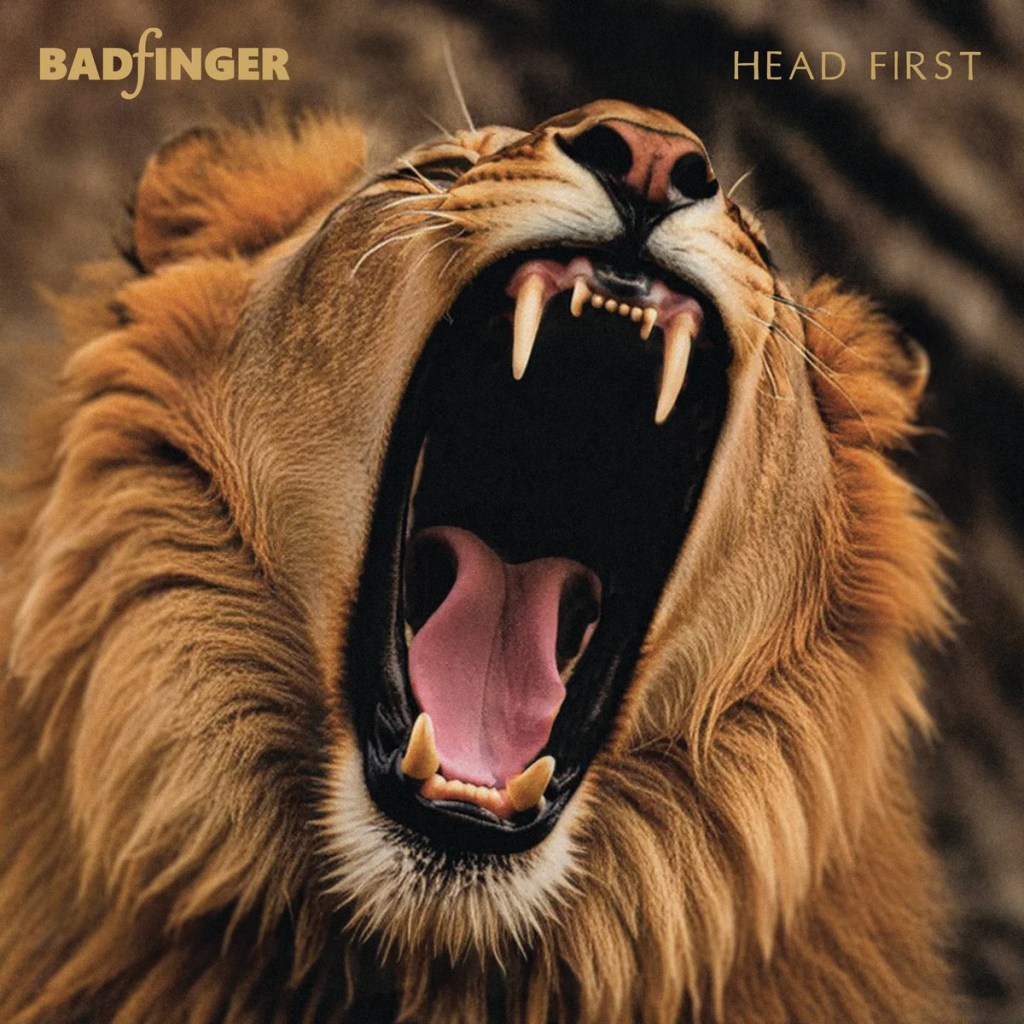
Head First album cover
After having been thought lost for nearly all this time, Bob Jackson finally managed to not only verify the existence of the master tape, but also get access to it. For him, it was a transformative experience. “Fantastic!” he exclaims. “It really brought back the whole atmosphere of 50 years ago. Unbelievable.” Bob’s eyes glaze over as he briefly relives that moment in his mind. “It was a really magical thing to hear,” he says wistfully. “Us chatting with each other, that kind of thing… I can’t really put it fully into words.”
In October 1974, Badfinger’s seventh LP, Wish You Were Here saw its troubled release (a full year before Pink Floyd monopolized that album title) — troubled, as in Warner Bros having first refused to accept the tapes due to financial wrangling with the band’s manager, Stan Polley, but later releasing the album without fanfare and with no single to promote it. There were conflicts in the group, and at a management meeting main songwriter Pete Ham snapped at the involvement of guitarist Joey Molland’s wife Kathy and very suddenly left the band.
Wish You Were Here album cover
Meanwhile, Bob Jackson, formerly lead vocalist and keyboardist of hard rock band Indian Summer, had joined up with Alan Ross in the band Ross. They had toured the USA in support of Eric Clapton. “That was a great, long tour,” says Bob. “But by the end I wasn’t completely happy.” He left the band and returned to his native Coventry without a clear plan in mind. In early October, quite out of the blue, he received an unsigned telegram asking if he wanted to audition for an unnamed band. “I never did find out who actually sent it,” says Bob, who nevertheless went to the audition, only to discover that it was for replacing Pete Ham in Badfinger. “That was quite a surprise!” He jammed with the band, playing rock’n’roll and blues standards. “We all seem to think it worked,” concludes Bob. “So I got the gig.”
But only a few days into rehearsals for the double bill tour they were going on with Man, Pete showed up, uninvited. “He listened, and he was nodding his head,” remembers Bob. “After a while the four of them went off somewhere, and I was left on my own, thinking, ‘What the hell is happening here?’” They were gone for quite a while. When they finally returned, they told Bob that Pete was coming back but that they also wanted him to remain. “That was a relief!” exclaims Bob. “So we did the tour as a five piece.”
Bob Jackson, Badfinger 2017 UK tour (source: badfingeruk.com)
But there were still internal conflicts and when the tour was finished, Joey Molland decided to leave, making Badfinger a quartet again. “That left me in the band with Pete, the guy I’d replaced,” muses Bob. “Very, very strange.” However, it was about to get even stranger. Only a week after the tour, their manager Stan Polley told them to record another album. “We didn’t understand the need for it because Wish You Were Here had only recently come out,” says Bob. “Stan Polley said, ‘Put what you want on it, it doesn’t matter. But record it because I want to hand it in for the next advance.’” Stan had booked the two first weeks of December for them at Apple Studios. Not a lot of studio time for an album — however, they saw no other choice but to go there. “There was no time booked in for rehearsals, or for working at the arrangements,” says Bob resignedly. “It was just, get on, do the job. So we did.”
“Stan Polley said, ‘Put what you want on it, it doesn’t matter.'”
Songs were pulled together in a rush, with everyone chipping in. Pete Ham could be seen in the lounge, hurriedly trying to put the final touches to what he probably intended as their next hit single, ‘Lay Me Down’. The fact that it wasn’t is almost beyond comprehension. Nights away from the studio were also spent working. Bob lived far away and spent some time in Tom Evans’ home, where they worked on ‘Passed Fast’. “Tommy had a little rehearsal thing upstairs in his house, and we wrote it up there,” says Bob. “We wanted to make it quite dramatic.” And that drama was reflected around them. One day, as Bob walked into the studio, having come down from Coventry, he noticed that something was terribly wrong. “Mike, the drummer, said, ‘Pete’s just thrown a wobbly. He’s thrown his guitar at the wall.’, says Bob. “All he was trying to do at the time was tune his guitar. But such was the rush and the confusion and angst.” Given all the excellent Pete Ham demos that have since surfaced, it is easy to think that the album could have been based on much stronger material, but there probably wasn’t time to think straight — and Pete’s thoughts weren’t necessarily straight at this point in time anyway.
Pete Ham and Tom Evans (Credit: Creative Commons)
While not on par with the honestly amazing Wish You Were Here, the album certainly holds its own ground, with great playing, classy vocal harmonies and some excellent tunes. Apart from the angry and frustrated lyrics — as on Evans’s furious ‘Hey Mr Manager’, his claustrophobic ‘Rock ‘n’ Roll Contract’ or Jackson’s doleful ‘Turn Around’ — it’s tumultuous gestation is not audible in the solid performances. “What were we gonna do after this album? Where were we going to go?,” asks Bob. “I think, actually that kind of cemented us together a bit.”
Sadly, the project was immediately caught up in legal battles with Warner Bros when Polley took the advance that had been placed in an escrow account. “We were in the middle of it. Our cheques stopped, it really was awful,” says Bob. “And of course, that led to the chain of events that led to Pete getting so depressed.” Pete Ham committed suicide on April 24, 1975, and there was no more Badfinger. Warner Bros pulled Wish You Were Here from the shelves, and Head First was cancelled.
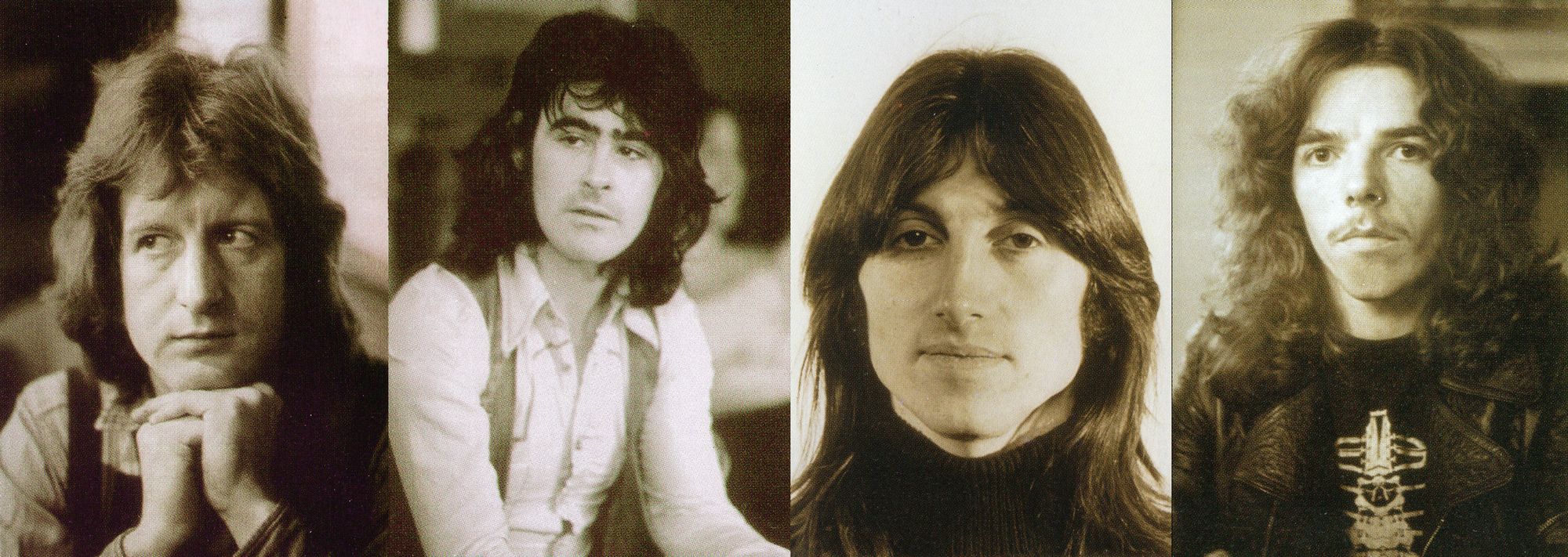
The Head First line-up: Pete Ham, Tom Evans, Bob Jackson, Mike Gibbins (source: badfingeruk.com)
In the year 2000, after extended legal wrangling with Warner Bros, Bob organised a release of the album based on the only available source; rough session mixes. The master had been brought to the USA for mixing in 1974, but Warner Bros were saying that it had since been lost. “They said they hadn’t got the master tape and they couldn’t find it. There was a space in the filing rack where the master should have been, and it wasn’t there,” says Bob. “I looked for years and had more or less given up.” But then, he found clues that made him think otherwise. “Someone had put stuff up on YouTube, kind of remixes of the album,” says Bob. “I thought, wait a minute, how did that happen?” Eventually, Warner Bros admitted to the master tape actually existing, and after even more wrangling, they agreed to let Bob use it for a proper mix. “For 48 years, I thought it was gone,” says Bod. “So it was amazing.”
Bob then together with Badfinger touring band member Andy Nixon set about working on the material. “If we were going to be true to the idea of the album, it’s was going to sound like it was from that era,” says Bob. “I didn’t want to make it sound too modern.” The result is very much what you’d expect from a Badfinger album, with a focus on melodic tension and release — the beating heart of any great pop song — rather than studio trickery. Apart from significantly improved sound, the changes compared to the 2000 release are more subtle. “People will hear stuff they haven’t heard before because we’ve included some of the chat,” says Bob. “We’ve even put on some of the count-ins.” Speaking of those, the already existing count-in for ‘Lay Me Down’ was initially removed. “Then we thought, no, actually it’s better with it on, so we kept that.” But as for outtakes, there wasn’t much to go on, due to the stressful recording situation. “It was just like bang, next one, bang, next one, bang,” remembers Bob. “We didn’t have the time to be subtle, so there wasn’t a lot of outtakes to include.”
“We didn’t have the time to be subtle”
The one exception is ‘Saville Row’, which has been extended from 36 seconds to almost two minutes and now ends the album. “I thought it was a little bit of an insult to ‘Savile Row’ on the Snapper release,” says Bob. But given that there wasn’t actually anything more on the master tape, he had to be creative about it. “We used the existing parts, but arranged them differently, so they don’t all just come in at once,” explains Bob, who instead used a staggered approach starting with simple keyboard, then enhancing the synth lead line and finally adding vocal parts copied in from other tracks. “We will never know what Pete was aiming at,” says Bob. “If he’d have developed it, I’m sure it would have been something completely different.”
Head First is released on Bandcamp exactly 50 years after its jinxed recording. A Friday 13th release date might seem fateful — but that just goes with the territory.
That’s right – the Junipers are back – and that is cause for celebration!
Even though it has been 8 years since their previous album, Imaginary Friends feels like a direct continuation. This makes a lot of sense as their music exists in a time slip wedged between reality and imagination, where songs like ‘Flight From Ashiya’ by Kaleidoscope and ‘Some Other Someday’ by the West Coast Consortium are forever playing on an old portable radio. The Junipers nailed the formula already from the get go with 2008 album Cut Your Key and have stuck to it ever since: sun-drenched, softly introspective psychedelic pop of the highest order, built on great melodies and tasteful arrangements.
And it seems we have that debut to thank for this new album, as members Joe Wiltshire and Robyn Gibson set out to re-record it in 2023, since they did not have ownership of the original and couldn’t reissue it. However, it seems a deal with the original record label was struck, a remixed digital deluxe edition was released and attention was instead turned to new material.
And judging from the sheer quality of every track on this album, a lot of material seems to have been piling up over the inactive years. So far three digital singles have been issued, but in all honesty, every track here is a winner.
While not (yet) a single, the album starts with the slightly dreamy yet catchy ‘Swarthy Smith’ that ends with a backwards organ organically leading into upbeat love song ‘You’re My Sugar and Spice’. Starting with the lyric “You’re my sugar and spice / you’re looking very nice / I will sing a song of love” it has a summery feel that just spreads warmth all over. At this point, one might fear that they have front loaded the album, but that is when the single cuts kick in. ‘She Looked Up At the Stars’ is built around a repeating organ figure firmly rooted in the late 60s and ends on a psychedelic swirl. It is followed by another irresistible single cut, ‘Annie Almond’ about a girl who “breaks hearts every time”. Sweet but never sugary.
In the years since previous album Red Bouquet Fair, Robyn Gibson has released a series of albums with covers of favourite tracks as Bob of the Pops, and some of that experience certainly has rubbed off here. There is an incredible attention to every little detail, the songs never overstay their welcome. And while there are some psychedelic effects and playful overdubs, they are used sparingly – such as the backwards voice leads on ‘While You Preside’, which, by the way, is the first track with guitar to the fore. A piano then drives the melody on ‘Mary in the Rain’, highlighting a sequencing that thoughtfully provides sonic variation. On the introspective ‘Monkey On My Back’ we get beautifully multitracked vocals and understated mellotron, whereas ‘I’ve Been In Your Shoes’ even edges towards doo wop but without a hint of pastiche.
With title track and single cut ‘My Imaginary Friend’ we are back on firm pop ground and ‘Red Song’ adds an autumnal touch before the album ends with the perfectly formed pop ditty ‘Hollow Sky’.
I have never before referenced every single track in a review of an album, which says something about the quality control here. For over half a century, bands have taken inspiration from the late 60s, but only few manage something more substantial than a homage. Now here is an album that is fully transparent with its many influences, yet manages to stand proudly with them.
TOM O.C. WILSON – Tell A Friend(Pickled Egg, UK 2017)
An album made for a PhD thesis exploring how far one can deviate from pop while still sounding pop would probably sound very strange. Yet that’s exactly what Tom Wilson did with Tell A Friend. It does sound exceedingly strange, but also singularly wonderful. “Each song explored a compositional question,” explains Tom. “But it was very important that it would still function as a pop record.”
Although born in 1983, pop to Tom basically means the Beatles. “I was listening to my parents’ record collection. But contemporary pop music was also looking back to that era,” says Tom and references bands like Blur and XTC. “My musical language was very rigorous. It was formed by an intense focus on pop craft,” he adds. “The tunefulness, that is huge for me. And a conciseness of expression,” specifies Tom, and continues: “Then at 18, I got this explosion of other influences.” Studying music at Southhampton University exposed him to everything from classical to world music. He made a couple of albums as Freeze Puppy, exploring these influences, culminating with Master’s Thesis album The Night Attendant in 2014. He then spent three years on his PhD album. “It was a session here, a session there,” says Tom. “My brother was renting a studio and kindly let us use it.”
Tom O.C Wilson (photo: Owen Lllewellyn)
Instrumentation on the album is intentionally traditional. “Using familiar sounds allows the listener to focus on the other aspects of the music,” explains Tom, who’s focus is clear: “The Beatles were always looking outside their own immediate language and struggling with how to incorporate that.” Tom’s explorations include abrupt melodic interventions, frequent time signature changes and extremely wordy lyrics. “I was looking for this balance between surprise and recognition of something that’s gone before,” he explains, although listeners might initially experience more of the former. ”Everyone’s gonna have a comfort level,” admits Tom. “Mine is maybe a little bit higher.”
The album’s title grounds it thematically in real life experiences with friends, such as the opening track about a friend who appreciates life more after severe illness. And the album ends with a song that puts the singer in a time loop. “It explores a setting where you’re with the person you want to be with on the kind of day you would most want to spend with them,” explains Tom. But of course there is a twist. “It ends on an unresolved chord, and then if you play the start of the album, it resolves.” says Tom, inviting the listener into his Groundhog Day fantasy. And repeated listens are indeed key for this album to reveal its undeniable beauty. But, whereas the record buying public welcomed challenging pop albums in the 60s, that is sadly no longer the case, and Tell A Friend made little impact upon its release. Time to change that!
Sternpost is the solo venture of Malmö, Sweden, based Petter Herbertsson. Whereas his 2018 album ANTI-CLOCK was a continuous collage of musical snippets, found sounds and wordless narration, his new album Ulrika is a carefully composed and arranged clutch of contemplative, acoustically driven pop songs with jazzy underpinnings. Yet, while being almost diametrical opposites in terms of execution, the two albums share Petter’s signature chord progressions and the ability to aurally teleport you to unknown worlds. On ANTI-CLOCK that world may have been a post Tower-of-Babel chaos where language has broken down, whereas we on the new album are invited into the thoughts of Ulrika, a girl seemingly in her teens, captured on a photographic triptych by artist Mats B in a 1973 issue of Swedish underground culture publication Vargen, as she ponders trivial everyday things such as rain, the colour green and buttons.
The final commonality between these otherwise very different albums is that they are, simply put, utterly brilliant. Unfortunately, brilliance is no longer a good yardstick for gaging success. In 2023 when a Spotify “stream” is measured as 30 seconds of music and songs just contain filler for the rest of their duration, brilliant pop music has been driven underground. This implies not only the loss of good mainstream tunes, but sadly also the societal loss of the transformative power of music. Luckily, for those wanting more than a product to mark time for their workout or drown out the noise of their commute, the underground remains vibrant. Petter is a case in point. As a leader for avant-pop group Testbild! over the course of twenty years, he has made some of the most consistently beautiful and creative music to ever come out of Sweden. Eight albums of catchy experimentalism with consistently abysmal sales. An album made together with somewhat more well-known pop auteur Louis Philippe as Ocean Tango sold slightly better but two or three or even four times nearly nothing still equals nearly nothing.
Unsurprisingly then, Petter’s pop, although never rowdy to start with, has become more contemplative and less immediate. By letting us vicariously inhabit the thoughts of the (imaginary?) girl Ulrika with childhood memories stretching well into the 1950s, he carries us on crackly AM airwaves into a sepia toned late night waking dreamworld, not unlike what Paddy McAloon does on I Trawl The Megahertz. But whereas McAloon employs a narrator to convey his sentiments, here the narrative is carried by the delicately frail lyrics, juxtaposing words with equal measures of inspiration, invention and nostalgia. Beautifully sung by Petter himself with the eminent support of Siri af Burén; jointly they exert magical soft power.
And although this album is the sort of masterpiece that stands on its own without the need for a multitude of references, I nevertheless need to sneak in one to Sean O’Hagan, particularly on a track like “Detta alternativa segel”.
But picking highlights is needless, as Petter’s quality control is impeccable throughout and the music effortlessly carries the listener to final highlight “Ekfras” (a word derived from Greek for a work of art depicting another work of art) with the lyrics impressionistically telling the story of the inspiration for the album.
While ANTI-CLOCK remains my favourite album of recent years — maybe in close competition with Tom OC Wilson’s equally unique Tell A Friend — Ulrika is my top pick for album of the year.
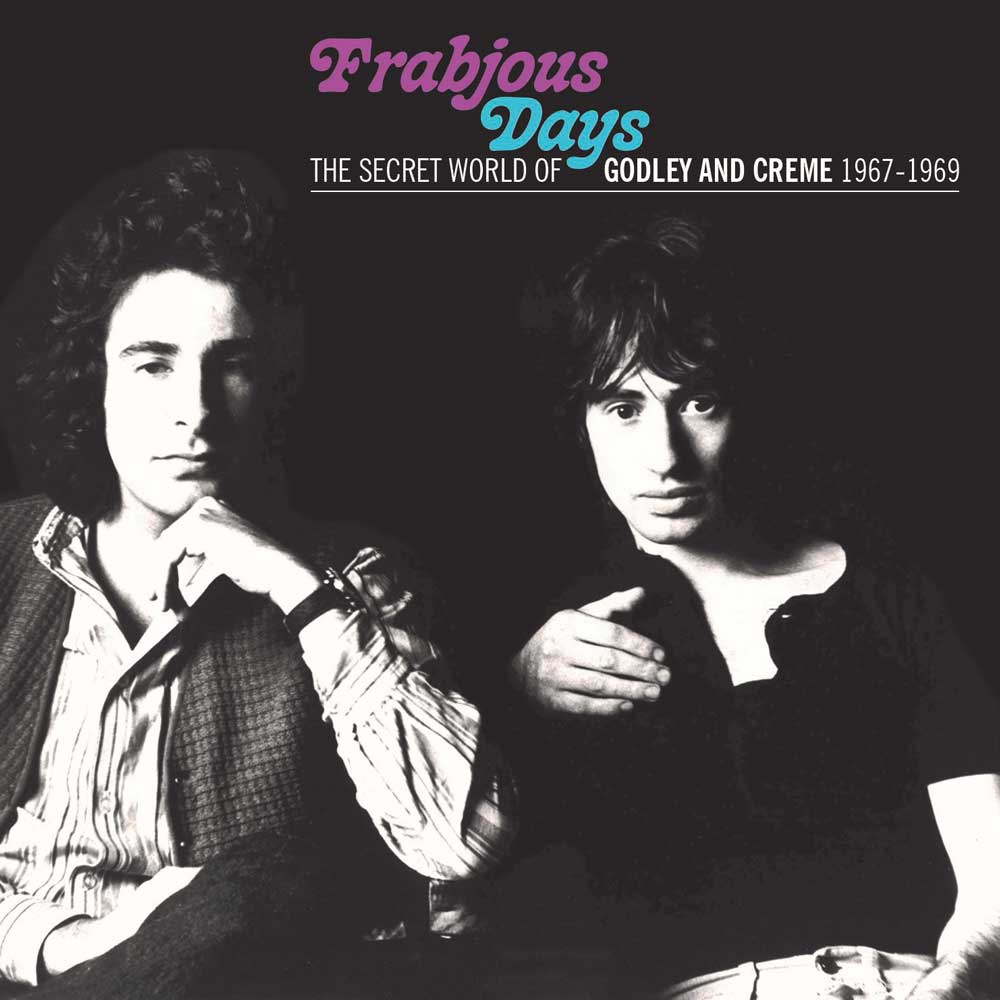
Here at long last is Godley & Creme’s lost Marmalade LP, intended to have been released in 1969 as Frabjoy and Runcible Spoon, resurrected by the Grapefruit label and collected with their other late 60s material.
The CD starts with a rustic take on ‘Im Beside Myself’, replete with Jew’s harp, banjo and harmonica, a sound surprisingly similar to their final 1988 LP Goodbye Blue Sky although they had been all over the musical map in between. ‘Chaplin House’, about a student lodging in Stoke-on-Trend where Godley went to art school comes next. Godley’s angelic falsetto takes centre stage, and it is abundantly clear why Marmalade label honcho Giorgio Gomelsky wanted to make an LP with these guys. This track, together with the even more amazing ‘Cowboys and Indians’ and the equally convincing ‘It’s The Best Seaside In The World’ were included in Kevin Godley’s digital 2015 memoir, Spacecake. Tech savvy readers could extract the tracks as low bitrate MP3s, but here they are presented in high quality – and boy do they ever sound good!
The final three tracks from the LP sessions, ‘Fly Away’, ‘Take Me Back’ and ‘Today’ would later appear on the 1970 Hotlegs LP, but are already fully formed and simply breathtaking despite being just rough mixes. The original take of ‘To Fly Away’ released as a Godley solo track on the 1969 Marmalade album sampler 100° Proof is also included but unfortunately suffers somewhat in comparison as the sound quality isn’t as good. In addition, the spunky Graham Gouldman track ‘The Late Mr. Late’ from the same sampler also appears, under the pretext that Godley is on backing vocals, together with two hitherto unpublished Gouldman demos with Godley on lead vocals. While definitely of interest, these Gouldman penned tracks can’t really hold a candle to the Godley & Creme originals.
Frabjoy and Runcible Spoon only ever released one single, and obviously it is included here. It couples a less rustic version of ‘I’m Beside Myself’ with the beautifully frail ‘Animal Song’ that certainly would have fitted on the LP even though from a session a few months earlier.
To wrap up, there is the 1967 single from the very first Godley & Creme venture, The Yellow Bellow Room Boom together with an unreleased acetate. All four songs are very good, though not of the Frabjoy and Runcible Spoon sessions recording quality. The package is rounded out with what may have been the last collaboration before before Godley & Creme got fully immersed in the Strawberry Studios activities. Commissioned by the Blinkers club as a promo single for their activities, it couples the throwaway ‘Hello Blinkers’ jingle already made available on the Bubble Rock Is Here To Stay compilation with a real gem of a B-side where Godley’s pitch perfect voice once again is to the fore.
A landmark release meticulously compiled and annotated by David Wells that should appeal to any lovers of 60s music while being a dream come true for 10cc fans.
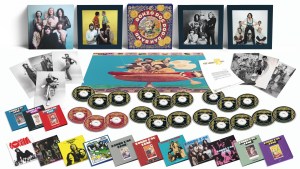
Why, in the age of streaming, should you even bother buying a CD box set? As far as I am concerned, Grapefruit Records have found the answer. It is all about the accompanying booklet.
Whereas analogue LPs might be bought on the grounds of the cover art and the (questionable) quality experience of having to turn sides after 20 minutes, a digital CD might not improve much on a lossless stream from Tidal or (soon) Apple Music. But with Grapefruit label owner David Well’s incredibly well-researched and insightful liner notes in your hands, the listening experience turns into a kaleidoscopic discovery journey. Yes, they really are that good. And the stories here constantly point you to side quests, prompting you to discover music way beyond the box set itself.
For me, this time round, the major discovery was the track ‘Once Upon A Dream’ by Rusty. I have long had their 1972 acetate test press on my Discogs wish list but have not come across a copy. Not only is the song included here a fabulous late 60s sounding Beatlesque psychedelic pop song, but it turns out that Cherry Red have made the whole album available for streaming as well, and to my surprise, it is a fully realised pop album in the same vein: some of the tracks are all the way up there with the nugget included here. The streamed album is a straight vinyl rip, vinyl clicks and all, and the first track is even full of digital jitter and transfer errors, so let us hope that Grapefruit eventually gets around to issuing a properly treated CD release!
Although I have a tendency to go down a rabbit hole, I should point out that this box set is not only for nerds. It caters expertly to listeners who are interested in getting an idea of what was going on not only in the charts of 1972 but also beyond them.
Many of the big names of the day are here, such as Thin Lizzy, The Moody Blues, Slade, Mott the Hoople, Roxy Music, even Yes. And, importantly, reading about them sheds new light on their music. Take Barclay James Harvest for example. Did you know that they released a single under the pseudonym Bombadil? Read all about it here.
Still, it is the lesser known contributions that draw me in. Some of them are totally new to me, such as the fabulous Ray Davis-penned ‘Nobody’s Fool’ by Cold Turkey or the wonderful soft psychedelia of ‘Birds Must Learn To Fly’ by the strangely named Rocky Cabbage or the magical ‘I Am… I Think’ by the even more strangely named group Grobbert & Duff. Fantastic stuff!
Then there are some thankful additions to my collection, such as the single that Rockin’ Horse made under the Atlantis pseudonym. I already had the A-side ‘I Ain’t Got Time’ on another compilation but was very happy to finally get to hear the Campbell rocker on the B-side, ‘Teddy Boyd’s Rock ‘N’ Roll Show’.
Another true highlight is the McCartneyesque ‘Maybe I’m Lost Without You’ by Neil Harrison. While I have this lost gem on the original single, the sound here is better, indicating the possibility that it might come from a recovered master tape. That idea in itself is a tantalising proposition: Neil recorded more songs during his time with Southern Music, and might this lead to a chance that they tapes still exist??
However, it seems that even David Wells can get his facts wrong at rare occasions, as he writes that Neil Harrison was involved in the 1977 Jabberwock single ’Sneakin’ Snaky’, which is not true. I contacted Neil, who wasn’t even aware of the realease of this compilation, to double check, and he says: “It must have been some other Neil Harrison.”
I could ramble on forever about this compilation, but I will not distract you any longer from going out to buy it now!
When putting on And So Sinks The Sun On A Broken Sea, my immediate reaction was: “Wow, Misophone haven’t really changed much since I first heard them a long long time ago!” But then I realised that this is a compilation, and the first track on there is indeed from a long long time ago, more exactly from their 2007 debut album, released on the Swedish Kning Disk label. A great record I must say, that bookends this compilation while pointing to the titular water theme.
Amazingly, although featuring songs from across their career, this compilation works incredibly well as an album. In fact, it has prompted me to seek out and buy all of this intriguing English duo’s original albums – and I can’t give you a better recommendation than that! (Unfortunately, physical copies of their two albums released on Japanese label Inpartmaint still elude me…)
In case you didn’t know, misophonia is a disorder of decreased tolerance to certain sounds, such as repeated clicking or for example chewing. Hence, Misophone present their music tentatively, as if trying to caress your ears and avoid triggering sudden reactions. The result is a very personal sort of introverted bedroom folk that combines a slow-burning knack for pop melody with a steampunky mix of timeless found sounds and Victorian music hall atmospherics.
But as if even such soft treading can in itself become repetitive and trigger misophonia, they also suddenly change gear, as on “Ghost of right wing America”, probably my favourite track here, with its discordant circus comp.














 Popgruppen