Keiron Phelan & Peace Signs – The Whole Band Just Turned Mellow
Lunophone – Surroundings
The Smile – Wall of Eyes
Testbild! – Bed Stilt
Kugelschreiber – Cheerleaders
The Martial Arts – In There Like Swimwear
Tom Penaguin – Tom Penaguin
Honourable mention
Craig Fortnam – Bespoke String Trios
(I commissioned a composition on this album. Being partial, it felt a bit odd putting it on the top list, but everything Craig Fortnam touches is magical.)
The 11th best album of 2024
The following 20 albums are all number 11 – music is not a competition, and they are all great! Listed as randomly as possible.
Hamish Hawk – A Firmer Hand
Simon Fisher Turner – Instability of the Signal
David deBarra – All My Dearly Beloveds
Richard Wileman – The Forked Road
Field Music – Limits of Language
Plantar – Sketches
Dirk Mont Campbell – Long Time Gone
Bill Ryder-Jones – lechyd Da
Matt Baber & Richard Wileman – Baber / Wileman 2
Stephen EvEns – Here Come The Lights
Gong – Unending Descending
The Cure – Songs of a Lost World
Peter Perret – The Cleansing
Midget! – Qui parle ombre
Willie Dowling – The Simpleton
Y Dail – Teigr
The Lemon Twigs – A Dream Is All We Know
Mothboxer – Twelve
Picturebox – Mobile Disco
Naima Bock – Below a Massive Dark Land
Single of the year 2024
The Poppermost – I Don’t Want To Know
(I never usually list singles – but ‘I Don’t Want To Know’ is just so good, I thought you might want to know!)
Brilliant art pop band The Great Crash recorded around 45 high quality demos in a derelict South Wales barn between 1972 and 1975. Those demos are now surfacing. Michael Björn talks to Al Gray and Nick Smith about their fantastic second archival release, Too Many Late Nights.
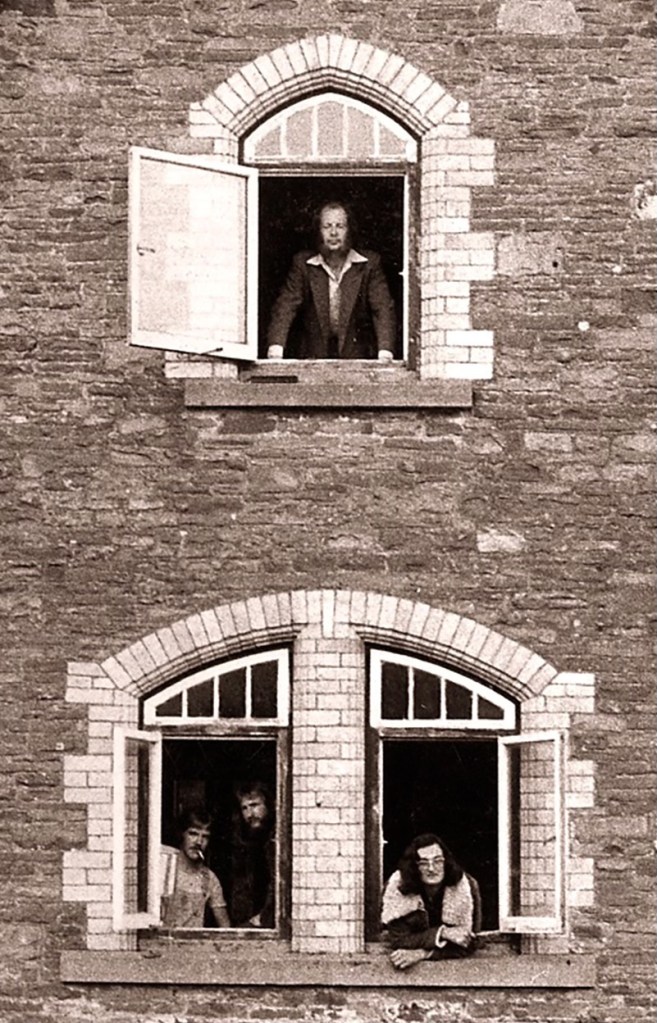
The Great Crash: Al Gray, Piers Geddes, George Benn, Nick Smith (photo: Nick Smith)
In 1970, Alan Gray, drummer Piers Geddes and some friends made a privately pressed concept album called Bertie. “It was a joke. Tommy had just come out. I thought it was a load of rubbish, so I thought I’d do my own,” says Al. “We sent a copy to John Peel, just for a laugh. But he liked it and actually replied.”
Meanwhile Nick Smith and George Benn were performing as an acoustic duo. “We were all in Southampton University,” says Al. “They were playing gigs at the university, and said ‘Why don’t we join up?’”
Initially calling themselves Springheel Jack, they recorded a good handful of acoustic tracks at IBC studios in London produced by Damon Lyon-Shaw. Unfortunately, the acetate has since been lost. Shortly after, they auditioned for Shel Talmy. Arriving early, they had a pint at a nearby pub, where out of nowhere someone slugged Piers on the nose. “There we were in Talmy’s office, with blood pouring out of Piers’ nose,” comments Nick. “Probably blew our chances.”
(decal by Gerry Thurston)
Having had a little success as an acoustic group, they decided to try going electric. Piers had found out that a relative of his had the remains of an unused, run-down country mansion, Plas Llecha, in Monmouthshire, South Wales with a barn where they could set up equipment and practice, so they decided to check it out.
“We had two extra members at that point,” remembers Al. “But when their girlfriends came down to visit, they were horrified at the living conditions, grabbed them by the scruff of their necks and took them home.” For the remaining foursome the week turned into a month and the month turned into a year. They ended up staying on for nearly three years, sustaining themselves on home-brewed beer and home-recorded music.
After having recorded a number of demos as the Great Crash in 1972, Al sent a tape to John Peel thinking Peel might remember him. ”He did, and he liked the demos,” says Al. Peel invited them to record a session for Sounds Of The Seventies. Sadly, the recording was far worse than their demos. ”We were the guinea pigs for the BBC’s new 8-track recording facility,” says Nick. ”They didn’t have a clue what they were doing.”
Although the session was aired twice, it lead to nothing. “Our our manager was always on the verge of getting us that elusive deal,” says Nick “When it finally happened, it was a complete disaster.” In 1974 they finally signed an album contract with Polygram. The producer, Emil Zoghby, came to Wales for a week to rehearse before going to the studio. ”He brought with him a vial of liquid cannabis, which he encouraged us to dip our Players No. 6 cigarettes into,” remembers Al. “Obviously, the rehearsals were quite fun, but not very constructive”.
After several all too relaxed days at Plas Llecha together with Emil, they again met up for a week of recording at Polygram’s Bayswater studios. “By the time we got into the studio, they had no idea what they wanted us to do,” says Al. Still, they went through the process of recording an four tracks, and then went back home without having heard so much as even a rough mix.
“Polygram sent us the mixes a week or two later. They basically had put in everything, their kitchen sink was probably in there somewhere as well: Brass section, a couple of extra guitarists, everything, “ says Al. “Somewhere buried in the middle is our little band, you know? It was hopeless. They obviously had no idea.” As the person who had signed them had also left Polygram, the album wasn’t happening and at the end of 1974. Sadly, the whereabouts of the master tapes are unknown.
And even more sadly — the failed record contract spelled the end of the band.
But — in 2003, Nick and bass player George got together, dug out all the surviving Plas Llecha demo tapes and digitalised the lot. A first compilation was eventually released on Seelie Court in 2021 as Deadfire Echoes, and now comes an even better collection, Too Many Late Nights, focusing mainly on their later and more complex material.
While initially having been two songwriting teams, Nick and George on the one hand, with Al and Piers on the other, songs were mainly written by Al and Piers during their years in Plas Llecha. Piers came up with lyrics and Al composed the music. George did write some pieces as well, but Nick focused more on turning their barn into a serviceable studio environment. The sound quality coming from their simple recording equipment in that damp and dilapidated barn speaks volumes of his ingenuity. “The backing tracks had to be recorded in one take. We couldn’t edit them together,” explains Nick. “If anybody fucked up, start again.”
Nick also carried some home-grown inventiveness over to his guitar playing and used broken milk machines littering the barn to build a phaser. “Nick took a motor out of one of them, mounted it on his amp so that an arm was fixed to the amp’s middle range fader,” explains Al. “When he clicked his foot, it came on and had this phasing effect. We used to get geeks peering up at it and asking him questions.”
But what truly sets the band apart is Piers’ awkward and hilarious lyrics. Very British in a Bonzo Doo-Dah Dog Band way, as on the track ‘Are You Hip To My Trip?’ Here, the protagonist is trying to sound more in tune with the times when smooth-talking women, because as the lyric states:
There’s not much you can do / if your love boat thinks you’re some kind of crank.
“One of Piers’ crazy ideas,” says Al. “It basically just gradually gets more and more crazy.” One certainly wonders what kind of woman would be flattered by the following:
You are the apple of my eye / you are the pear of my tongue / you are the orange of my thigh / you are the greengage of my lung / you are the rhubarb of my chest / you are the leek of my cheek / you are the cabbage of my bile duct.
Piers’ lyrics have stood the test of time incredibly well, but early 1970s listeners were puzzled by them. “Puzzled is a very generous interpretation!” exclaims Nick. “Trying to get a record deal, it drove us crazy. We asked Piers; ‘Just write some commercial lyrics!’” But whereas record executives might just shrug their heads and leave the room, playing in front of audiences in local rugby clubs and social clubs was challenging on a different scale. “We learned the lesson pretty quickly,” says Nick. “Covers were the thing pretty soon after that.”
The Great Crash at home in Plas Llecha, South Wales (photo: Nick Smith)
Although ‘Hero Of The Beach’ is one of the few earlier demos on the album. The humour is already there. “That was one we did for John Peel,” says Al. “He thought it was going to be something about Sgt. Fury, on the beach on D-Day or something.” But instead it was a 50s styled sendup of boys trying to look macho on the beach, akin to ‘Sand In My Face’ by the 10cc.
But it wasn’t just the lyrics, the music could be pretty strange too, such as on one of their final demos, recorded in 1975. ‘Sidetrack Doubleback’ manages to subvert disco by being very rhythmical and catchy but also impossible to dance to, simultaneously fulfilling and obfuscating the point of that genre. “I was quite intrigued by disco, but I just couldn’t get it,” comments Nick “The drum patterns were so simple… we were used to more of a complication.” Yeah, you can say that again! Or you could think of another 10cc track, ‘The Sacro-Iliac’…
The last song is also the album’s title track. “Too many late nights and penny ices was an expression of my mother’s,” remembers Al. “If a child was throwing a wobbly, it was because they had been spoilt and had been staying up too late.” Listening to the embarrassment of riches almost overcrowding this album, it is easy to feel spoilt and to stay up late for repeat listens. But the fact that these demos were never turned into a proper album back in the day, where it would have sat comfortably with albums from bands like the 10cc or Stackridge, is certainly something to throw a wobbly over.
Or maybe not? It seems that the band members are at least reconciled with their past. “I think we all see it as a sort of a failure,” says Nick. “But we went our own way and did what we wanted to do. So I suppose we were very lucky.” Al points out that the success rate in the music industry is very low. “And the people who have been financially successful, have usually killed themselves with drugs — or coming off the drugs has killed them,” he concludes. “So I think failure has been our success.”
Too Many Late Nights by the Great Crash is out now on Seelie Court.
Too Many Late Nights album cover (Seelie Court Digital – scd 064)
Badfinger recorded Head First at Apple Studios the first two weeks of December 1974. Apart from a rough mix appearing in 2000, it only now sees a proper release. Michael Björn talks to surviving member Bob Jackson about the most downtrodden power pop album of the last 50 years.
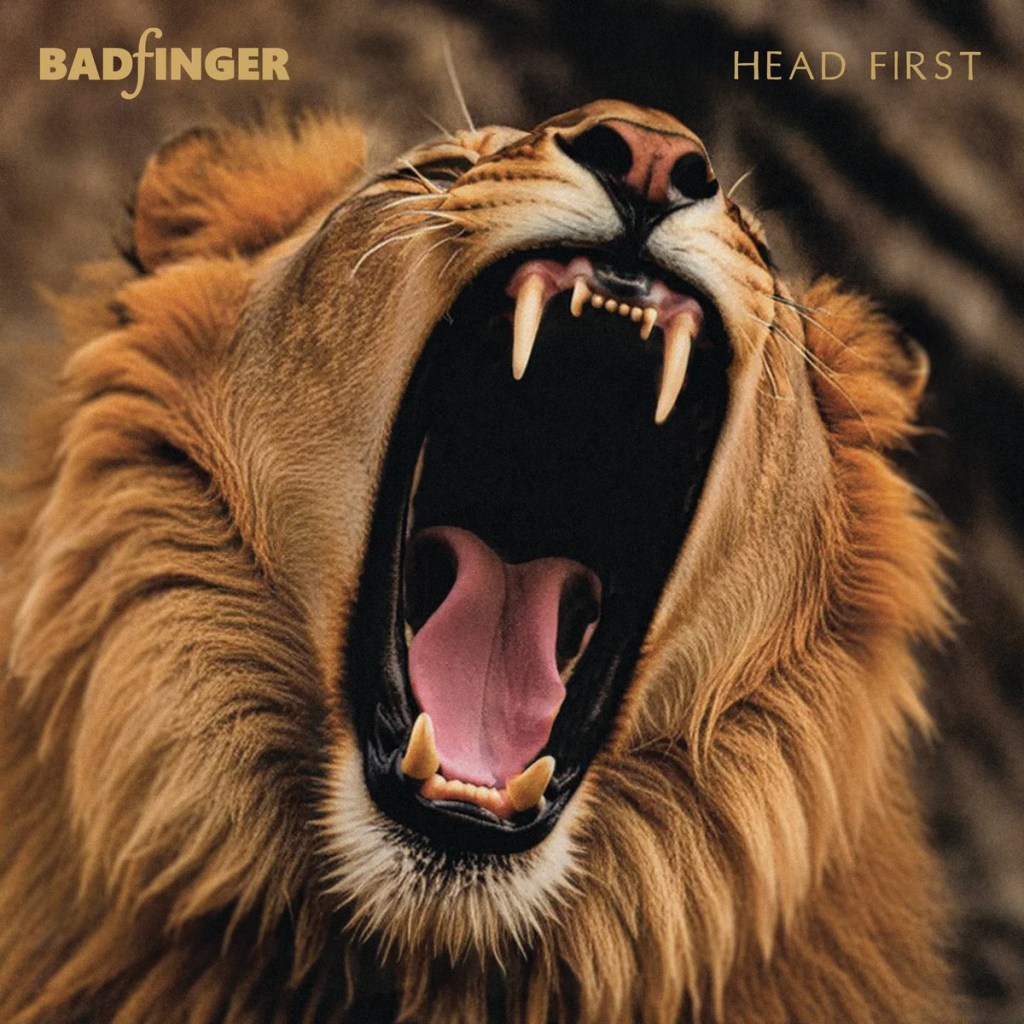
Head First album cover
After having been thought lost for nearly all this time, Bob Jackson finally managed to not only verify the existence of the master tape, but also get access to it. For him, it was a transformative experience. “Fantastic!” he exclaims. “It really brought back the whole atmosphere of 50 years ago. Unbelievable.” Bob’s eyes glaze over as he briefly relives that moment in his mind. “It was a really magical thing to hear,” he says wistfully. “Us chatting with each other, that kind of thing… I can’t really put it fully into words.”
In October 1974, Badfinger’s seventh LP, Wish You Were Here saw its troubled release (a full year before Pink Floyd monopolized that album title) — troubled, as in Warner Bros having first refused to accept the tapes due to financial wrangling with the band’s manager, Stan Polley, but later releasing the album without fanfare and with no single to promote it. There were conflicts in the group, and at a management meeting main songwriter Pete Ham snapped at the involvement of guitarist Joey Molland’s wife Kathy and very suddenly left the band.
Wish You Were Here album cover
Meanwhile, Bob Jackson, formerly lead vocalist and keyboardist of hard rock band Indian Summer, had joined up with Alan Ross in the band Ross. They had toured the USA in support of Eric Clapton. “That was a great, long tour,” says Bob. “But by the end I wasn’t completely happy.” He left the band and returned to his native Coventry without a clear plan in mind. In early October, quite out of the blue, he received an unsigned telegram asking if he wanted to audition for an unnamed band. “I never did find out who actually sent it,” says Bob, who nevertheless went to the audition, only to discover that it was for replacing Pete Ham in Badfinger. “That was quite a surprise!” He jammed with the band, playing rock’n’roll and blues standards. “We all seem to think it worked,” concludes Bob. “So I got the gig.”
But only a few days into rehearsals for the double bill tour they were going on with Man, Pete showed up, uninvited. “He listened, and he was nodding his head,” remembers Bob. “After a while the four of them went off somewhere, and I was left on my own, thinking, ‘What the hell is happening here?’” They were gone for quite a while. When they finally returned, they told Bob that Pete was coming back but that they also wanted him to remain. “That was a relief!” exclaims Bob. “So we did the tour as a five piece.”
Bob Jackson, Badfinger 2017 UK tour (source: badfingeruk.com)
But there were still internal conflicts and when the tour was finished, Joey Molland decided to leave, making Badfinger a quartet again. “That left me in the band with Pete, the guy I’d replaced,” muses Bob. “Very, very strange.” However, it was about to get even stranger. Only a week after the tour, their manager Stan Polley told them to record another album. “We didn’t understand the need for it because Wish You Were Here had only recently come out,” says Bob. “Stan Polley said, ‘Put what you want on it, it doesn’t matter. But record it because I want to hand it in for the next advance.’” Stan had booked the two first weeks of December for them at Apple Studios. Not a lot of studio time for an album — however, they saw no other choice but to go there. “There was no time booked in for rehearsals, or for working at the arrangements,” says Bob resignedly. “It was just, get on, do the job. So we did.”
“Stan Polley said, ‘Put what you want on it, it doesn’t matter.'”
Songs were pulled together in a rush, with everyone chipping in. Pete Ham could be seen in the lounge, hurriedly trying to put the final touches to what he probably intended as their next hit single, ‘Lay Me Down’. The fact that it wasn’t is almost beyond comprehension. Nights away from the studio were also spent working. Bob lived far away and spent some time in Tom Evans’ home, where they worked on ‘Passed Fast’. “Tommy had a little rehearsal thing upstairs in his house, and we wrote it up there,” says Bob. “We wanted to make it quite dramatic.” And that drama was reflected around them. One day, as Bob walked into the studio, having come down from Coventry, he noticed that something was terribly wrong. “Mike, the drummer, said, ‘Pete’s just thrown a wobbly. He’s thrown his guitar at the wall.’, says Bob. “All he was trying to do at the time was tune his guitar. But such was the rush and the confusion and angst.” Given all the excellent Pete Ham demos that have since surfaced, it is easy to think that the album could have been based on much stronger material, but there probably wasn’t time to think straight — and Pete’s thoughts weren’t necessarily straight at this point in time anyway.
Pete Ham and Tom Evans (Credit: Creative Commons)
While not on par with the honestly amazing Wish You Were Here, the album certainly holds its own ground, with great playing, classy vocal harmonies and some excellent tunes. Apart from the angry and frustrated lyrics — as on Evans’s furious ‘Hey Mr Manager’, his claustrophobic ‘Rock ‘n’ Roll Contract’ or Jackson’s doleful ‘Turn Around’ — it’s tumultuous gestation is not audible in the solid performances. “What were we gonna do after this album? Where were we going to go?,” asks Bob. “I think, actually that kind of cemented us together a bit.”
Sadly, the project was immediately caught up in legal battles with Warner Bros when Polley took the advance that had been placed in an escrow account. “We were in the middle of it. Our cheques stopped, it really was awful,” says Bob. “And of course, that led to the chain of events that led to Pete getting so depressed.” Pete Ham committed suicide on April 24, 1975, and there was no more Badfinger. Warner Bros pulled Wish You Were Here from the shelves, and Head First was cancelled.
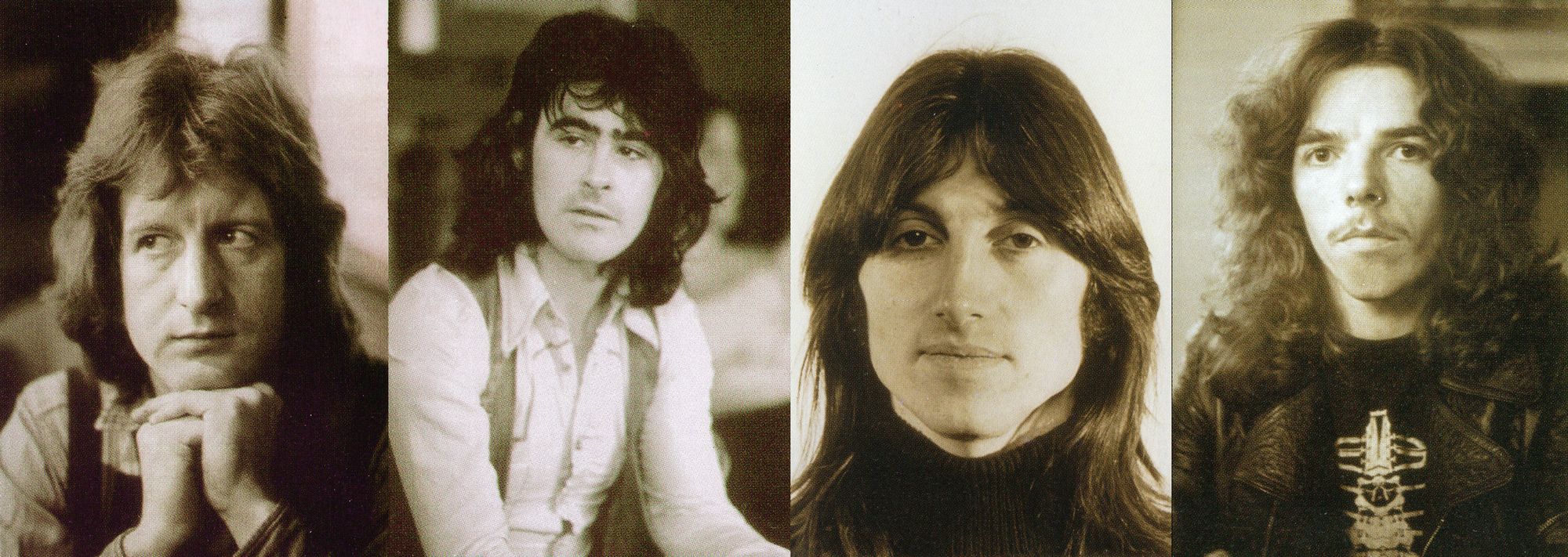
The Head First line-up: Pete Ham, Tom Evans, Bob Jackson, Mike Gibbins (source: badfingeruk.com)
In the year 2000, after extended legal wrangling with Warner Bros, Bob organised a release of the album based on the only available source; rough session mixes. The master had been brought to the USA for mixing in 1974, but Warner Bros were saying that it had since been lost. “They said they hadn’t got the master tape and they couldn’t find it. There was a space in the filing rack where the master should have been, and it wasn’t there,” says Bob. “I looked for years and had more or less given up.” But then, he found clues that made him think otherwise. “Someone had put stuff up on YouTube, kind of remixes of the album,” says Bob. “I thought, wait a minute, how did that happen?” Eventually, Warner Bros admitted to the master tape actually existing, and after even more wrangling, they agreed to let Bob use it for a proper mix. “For 48 years, I thought it was gone,” says Bod. “So it was amazing.”
Bob then together with Badfinger touring band member Andy Nixon set about working on the material. “If we were going to be true to the idea of the album, it’s was going to sound like it was from that era,” says Bob. “I didn’t want to make it sound too modern.” The result is very much what you’d expect from a Badfinger album, with a focus on melodic tension and release — the beating heart of any great pop song — rather than studio trickery. Apart from significantly improved sound, the changes compared to the 2000 release are more subtle. “People will hear stuff they haven’t heard before because we’ve included some of the chat,” says Bob. “We’ve even put on some of the count-ins.” Speaking of those, the already existing count-in for ‘Lay Me Down’ was initially removed. “Then we thought, no, actually it’s better with it on, so we kept that.” But as for outtakes, there wasn’t much to go on, due to the stressful recording situation. “It was just like bang, next one, bang, next one, bang,” remembers Bob. “We didn’t have the time to be subtle, so there wasn’t a lot of outtakes to include.”
“We didn’t have the time to be subtle”
The one exception is ‘Saville Row’, which has been extended from 36 seconds to almost two minutes and now ends the album. “I thought it was a little bit of an insult to ‘Savile Row’ on the Snapper release,” says Bob. But given that there wasn’t actually anything more on the master tape, he had to be creative about it. “We used the existing parts, but arranged them differently, so they don’t all just come in at once,” explains Bob, who instead used a staggered approach starting with simple keyboard, then enhancing the synth lead line and finally adding vocal parts copied in from other tracks. “We will never know what Pete was aiming at,” says Bob. “If he’d have developed it, I’m sure it would have been something completely different.”
Head First is released on Bandcamp exactly 50 years after its jinxed recording. A Friday 13th release date might seem fateful — but that just goes with the territory.









 Popgruppen